
SBD C8 Z06 & Grand Sport Replacement Brake Rotor Rings | X-PH
28th Oct 2026
High-performance brakes are consumable components.
That becomes especially important on a car like the Chevrolet C8 Corvette Z06, where repeated hard braking on the street or track can eventually wear through pads and rotor friction surfaces.
With a conventional one-piece rotor, replacement is straightforward: the entire rotor comes off and a new one goes on.
A factory two-piece rotor introduces another possibility.
The aluminum or lightweight center hat may still be perfectly usable even when the outer iron friction ring has reached the end of its service life.
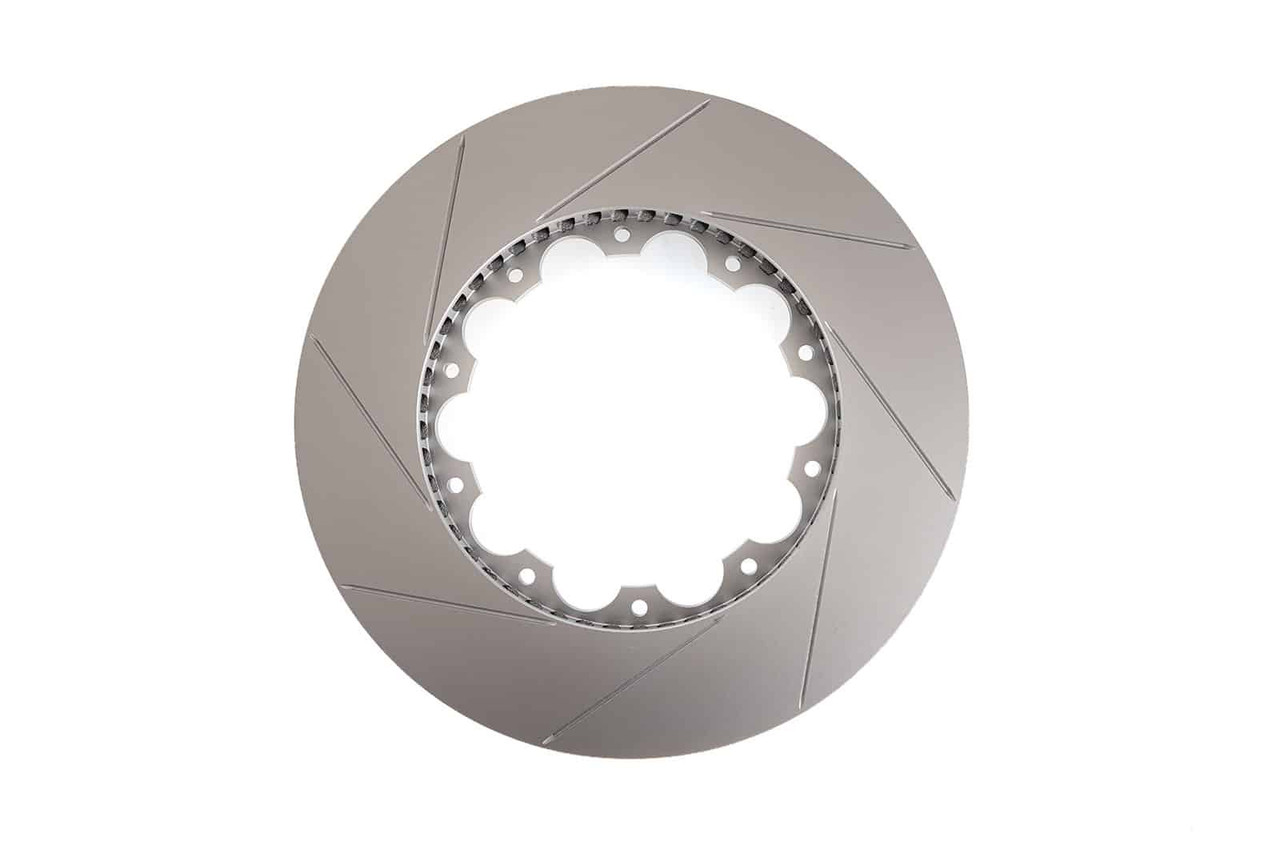
That is exactly the idea behind the SBD Replacement Brake Rotor Rings for the 2023+ Chevrolet C8 Corvette Z06 and 2027+ Corvette Grand Sport.
Available from Extreme Power House, these replacement rings are designed to reuse the vehicle’s factory center hats and bobbin hardware, allowing owners to replace the wear surface instead of purchasing another complete OEM two-piece rotor assembly.
At the same time, SBD introduces several performance-focused changes of its own, including GG15HC high-carbon iron construction, directional slots, curved internal cooling vanes, and NOF Geomet 360 corrosion-resistant coating.
For C8 owners who use their cars hard—or simply want a more serviceable long-term brake setup—the result is an interesting combination of OEM integration and upgraded rotor-ring engineering.
Replace the Wear Surface, Keep the Factory Hat
The central idea behind the SBD system is simple.
The friction ring is the portion of a brake rotor that actually interacts with the brake pad.
Every time the brakes are applied, friction generates heat and gradually removes material from both the pad and rotor.
The center hat, on the other hand, does not experience the same friction wear.
On a two-piece rotor system, there is no reason to automatically discard a good factory center hat simply because the iron ring has worn out.
SBD designed these replacement rings so owners can reuse the original Chevrolet center hats and factory bobbin hardware.
That turns the factory two-piece architecture into a more serviceable system.
When the friction surfaces eventually need replacement, the owner can replace the rings rather than starting again with two complete rotor assemblies.
Why Reusing the OEM Hats Matters
Performance brake components are expensive, particularly on vehicles engineered to operate at the level of the C8 Z06.
A complete two-piece rotor includes several major components:
The outer friction ring.
The center hat.
And the floating or semi-floating hardware connecting the two.
But those components do not necessarily wear at the same rate.
The iron ring is intentionally sacrificial.
The center hat is not.
By retaining serviceable OEM hats, the SBD solution can reduce the amount of hardware that needs to be replaced during a rotor service.
That is particularly attractive to owners who regularly attend track days and may go through brake consumables considerably faster than someone using the Corvette exclusively for casual street driving.
Designed Around the Factory Two-Piece Brake System
This is not a universal rotor ring adapted to fit the Corvette.
SBD developed separate front and rear rings around the factory C8 brake dimensions.
The front replacement ring measures 370 mm x 34 mm, or approximately 14.6 x 1.34 inches.
The rear replacement ring measures 380 mm x 34 mm, or approximately 15.0 x 1.34 inches.
That allows the replacement components to integrate with the original hats and brake system while maintaining the dimensions required by the factory calipers and pad geometry.
Front and Rear Sets Are Selected Separately
The XPH listing allows customers to choose either the front or rear rotor-ring set.
Each option is sold as a pair and includes:
- One left-side rotor ring
- One right-side rotor ring
The listed price is for two rotor rings, not one.
The original center hats and bobbin hardware are not included because they are intended to be transferred from the vehicle’s existing rotors.
That distinction is important when planning a brake service.
These are replacement rings for the OEM two-piece assemblies, not complete ready-to-install rotors with new hats.
GG15HC High-Carbon Iron Construction
SBD casts the replacement rings from GG15HC high-carbon iron.
Brake-rotor material has to tolerate enormous thermal and mechanical stress.
During repeated hard braking, the rotor absorbs kinetic energy from the car and converts it into heat.
On a track-driven Corvette, that heat cycle can happen repeatedly over a relatively short period.
The material therefore needs to cope with high temperatures, repeated heating and cooling, and significant mechanical loading.
SBD selected GG15HC high-carbon iron with strength, durability, and high-performance brake use in mind.
Built for Street and Track Use
These rings are not positioned solely as dedicated competition components.
SBD lists them for both street and track use.
That makes them relevant to several different kinds of C8 owners.
For a street-driven Z06, they can provide a replacement path once the original iron rotors wear out.
For someone who attends occasional HPDE or track events, the cooling and slotted design become more relevant.
And for frequent track users, the ability to service the rotor rings while retaining the factory hats can become increasingly valuable over the life of the car.
Directional Slotted Rotor Design
The SBD rings use a directional slotted friction surface.
Slots can help manage the interface between the pad and rotor during demanding braking.
As brake pads operate at high temperature, material and gases can accumulate around the contact surface.
A properly engineered slotted rotor gives that material additional paths away from the pad face while continually exposing the pad to a fresh rotor surface.
The slots also give the rotor a clearly performance-oriented appearance through the Corvette’s wheels.
But the functional benefit becomes most relevant when braking temperatures rise.
Curved Cooling Vanes Instead of the Factory Pillar-Vane Design
One of the biggest engineering differences between the SBD rings and the factory iron rotor design is inside the rotor.
SBD uses curved internal cooling vanes rather than the OEM pillar-vane configuration.
These curved vanes are designed to improve the movement of cooling air through the rotor.
SBD describes the vane system as acting like a centrifugal pump.
As the rotor spins, air is drawn inward through the center area and moved through the internal passages before exiting toward the outer diameter.
The objective is straightforward:
Move more air through the rotor.
Carry more heat away.
And help the brake system manage repeated high-energy stops.
Brake Cooling Is About Consistency
The value of rotor cooling is not simply that the disc becomes cooler after one braking event.
The bigger concern is what happens over an entire session of repeated braking.
Every major braking zone adds more thermal energy.
If the rotor cannot shed enough heat between those events, temperatures continue to rise.
As the brake system becomes hotter, several things can become more challenging:
Pad behavior may change.
Brake fluid temperatures rise.
Rotor temperatures increase.
And the overall system can become less consistent.
A better-ventilated rotor cannot eliminate those limits, but improved internal airflow can help the system manage heat more effectively.
That is especially relevant to a C8 Z06 being driven at the circuit rather than simply around town.
Directional Rotors Mean Left and Right Matter
Because the internal vanes are directional, SBD supplies a specific left-side and right-side rotor ring.
That orientation matters.
A curved-vane rotor installed on the wrong side would not move cooling air through the disc in the way the design intended.
This is why the pair includes dedicated left and right components rather than two identical rings.
Correct assembly and installation are essential.
NOF Geomet 360 Coating
Bare brake rotor material is exposed to water, humidity, road salt, and other environmental contaminants.
SBD applies an NOF Geomet 360 coating to help protect the rotor vanes against corrosion.
That protection is particularly useful inside the ventilation passages.
The pad will naturally sweep the working friction surface during use, but internal vanes do not receive that same cleaning action.
Protective coating therefore helps address corrosion in areas that can otherwise be difficult to access.
Front Rotor Ring Weight
Each SBD front rotor ring weighs approximately 20.20 lb.
The front rings measure:
370 mm x 34 mm
14.6 in x 1.34 in
These dimensions correspond to the compatible factory front iron-brake application.
The OEM replacement rotor part number referenced by SBD is 84041944, with two complete OEM rotors normally required for the front axle.
Rear Rotor Ring Weight
Each rear SBD ring weighs approximately 22.85 lb.
Rear dimensions are:
380 mm x 34 mm
15.0 in x 1.34 in
The referenced OEM rear replacement rotor part number is 86822032, again with two complete OEM rotors normally required for the rear axle.
The rear rotor is therefore slightly larger in diameter than the front ring in this application.
Designed Specifically for J56 Iron Brakes
This is the most important fitment point in the entire product listing.
The SBD rotor rings are designed only for vehicles equipped with the RPO J56 iron brake package.
Before ordering, customers should confirm the brake system fitted to their Corvette.
Simply owning a Z06 is not enough to guarantee compatibility.
The correct RPO code matters.
Not for J58 Carbon-Ceramic Brakes
These replacement rings do not fit vehicles equipped with the J58 carbon-ceramic brake system.
That distinction needs to remain clear.
The iron and carbon-ceramic brake packages use different components and should not be treated as interchangeable simply because they are both offered on the same vehicle platform.
Owners with J58 carbon ceramics need a solution designed specifically around that brake package.
2023+ Chevrolet Corvette Z06 Fitment
SBD lists the rotor rings for the:
2023+ Chevrolet C8 Corvette Z06
when equipped with the J56 iron brake system.
That makes the product particularly relevant as early C8 Z06 cars accumulate more mileage and track time.
As those factory iron rings eventually wear, owners now have an option designed to retain the original hats rather than automatically replacing the complete factory rotor assemblies.
2027+ Corvette Grand Sport Fitment
The rings are also listed for the:
2027+ Chevrolet C8 Corvette Grand Sport
with the compatible J56 iron brake configuration.
Because the Grand Sport application begins with the 2027 model year, customers should still verify the exact production vehicle and brake equipment before ordering.
The key requirement remains the compatible factory iron-brake architecture.
A Particularly Useful Option for Track-Day Owners
Rotor replacement frequency depends heavily on how the car is used.
A Corvette that spends most of its life on public roads may cover substantial mileage before the discs need attention.
A car driven hard at track events can consume brake components much faster.
Repeated high-temperature braking increases wear on:
- Pads
- Rotor friction surfaces
- Brake fluid
- Other brake-system consumables
That means a serviceable two-piece setup becomes especially attractive for frequent track users.
Once the center hats are already on the car, the owner can focus future rotor service around the parts that actually wear.
Why Not Just Replace the Complete OEM Rotor?
A full OEM replacement remains an option.
But if the original center hat and hardware remain serviceable, replacing the entire assembly means replacing components that may not actually be worn.
The SBD approach is intended to reduce that unnecessary replacement cost.
Instead of purchasing another complete hat-and-ring assembly, the owner transfers the usable OEM hardware to the new SBD friction rings.
That is the main economic advantage of the design.
It Still Requires Proper Inspection
Reusing factory hats does not mean they should automatically be reused forever.
Any component being transferred to a new rotor ring should be carefully inspected.
Before assembly, the installer should check the condition of:
- Center hats
- Bobbins
- Fasteners
- Mounting surfaces
- Hardware
- Any component showing wear or damage
If factory hardware is outside specification, damaged, or unsuitable for reuse, it should be replaced rather than transferred simply to reduce cost.
Brake systems are safety-critical assemblies.
Professional Assembly Is Recommended
Replacing rings on a two-piece rotor is more involved than installing an ordinary one-piece brake disc.
The rotor has to be disassembled correctly.
The OEM hat and bobbin system must be inspected.
The new ring needs to be installed in the proper direction.
Fasteners must be assembled and torqued according to the appropriate procedure.
For that reason, professional installation by a technician experienced with two-piece performance brake systems is strongly recommended.
Front or Rear? Choose the Correct Set
The product page offers a choice between front and rear rotor rings.
Those are different components.
Front:
370 x 34 mm
20.20 lb per ring
Rear:
380 x 34 mm
22.85 lb per ring
Owners servicing all four corners would therefore need the appropriate front pair and rear pair.
One Pair Covers One Axle
Each purchased set includes two rings:
One left.
One right.
That means one front set services the complete front axle.
One rear set services the complete rear axle.
The factory hats and hardware are reused separately for each corner.
Pairing the Rings With Street Brake Pads
For vehicles used primarily on the street, SBD specifically recommends pairing the rings with GG-rated ceramic brake pads.
SBD positions that combination around:
- Very low brake dust
- Quiet operation
- Extended pad life
That can be attractive on a street-driven Z06 where the owner wants strong braking hardware without constantly cleaning dark pad dust from the wheels.
Street Pads and Track Pads Serve Different Goals
A street-focused ceramic pad and a dedicated track pad are not intended to solve the same problem.
Street pads may prioritize:
Quiet operation.
Low dust.
Cold response.
Longevity.
Track pads may instead place greater emphasis on:
High-temperature friction.
Fade resistance.
Repeated heavy braking.
That means rotor selection is only one part of the brake setup.
Pad compound should still be matched to how the vehicle will actually be driven.
High-Performance Braking Is a Complete System
A rotor does not work in isolation.
Brake performance depends on the relationship between:
- Rotor
- Pad compound
- Caliper
- Brake fluid
- Cooling
- Tire grip
- Vehicle speed
- Driving conditions
For frequent track use, maintenance becomes equally important.
Fresh high-temperature brake fluid and correctly selected pads may matter just as much as the rotor itself.
The SBD rings provide the friction surface and cooling architecture, but the rest of the braking system still needs to be configured around the intended use.
Curved Vanes Can Be Especially Valuable on Track
The curved-vane design becomes most relevant during repeated heavy braking.
A single stop from normal road speed may not expose the cooling difference dramatically.
A full track session is a very different environment.
The rotor repeatedly accelerates, brakes, heats, and cools.
With curved vanes acting to draw air through the rotor as it spins, the system can continuously move cooling air through the disc.
That is exactly the type of environment where internal rotor design matters most.
Slotted Without Becoming Overly Complicated
The SBD rings use slots rather than a drilled-and-slotted combination.
That keeps the friction surface focused on directional slotting without adding drilled holes across the rotor face.
For a high-performance application, that creates a straightforward track-oriented appearance and gives gases and pad debris a path away from the contact surface.
A Practical Long-Term Brake Strategy
The biggest benefit of these rings may become apparent only after multiple brake services.
The first time a rotor wears out, replacing only the ring avoids discarding a reusable center section.
Then, when the replacement ring eventually wears again, the same service strategy can potentially be repeated if the hats and hardware remain within specification.
For owners who keep their cars for years and drive them hard, serviceability can become just as important as initial purchase price.
Key Features
The SBD C8 Corvette replacement rotor rings offer:
- Designed for the 2023+ C8 Corvette Z06
- Listed for the 2027+ C8 Corvette Grand Sport
- Fits RPO J56 iron brakes only
- Does not fit J58 carbon-ceramic brakes
- Reuses factory center hats
- Reuses factory bobbin hardware
- Sold in left/right pairs
- Separate front and rear options
- GG15HC high-carbon iron construction
- Directional slotted friction surfaces
- Curved internal cooling vanes
- Improved cooling architecture versus the factory pillar-vane design
- NOF Geomet 360 corrosion-resistant coating
- Suitable for street and track use
- Front dimensions: 370 x 34 mm
- Rear dimensions: 380 x 34 mm
- Front ring weight: 20.20 lb
- Rear ring weight: 22.85 lb
Who Are These Rotor Rings For?
These rings make the most sense for C8 Corvette owners who:
- Have the factory J56 iron brake package
- Need to replace worn rotor friction surfaces
- Want to retain serviceable OEM hats
- Attend track days
- Want improved internal cooling geometry
- Prefer slotted rotors
- Want a more serviceable two-piece brake setup
- Are looking to reduce the cost of future rotor replacement
They are particularly compelling for owners who expect brake rotors to be a recurring consumable rather than a once-in-the-life-of-the-car service item.
Confirm the Brake RPO Code Before Ordering
Before buying anything, verify the car’s brake package.
This cannot be overemphasized.
J56 iron brakes: compatible.
J58 carbon-ceramic brakes: not compatible.
That is the primary fitment distinction.
Customers should also confirm whether they require the front or rear set before ordering.
Upgrade the Serviceability of Your C8 Brakes at Extreme Power House
The C8 Corvette Z06 is capable of generating serious speed.
Managing that speed repeatedly places equally serious demands on the braking system.
The SBD Replacement Brake Rotor Rings provide an alternative to replacing an entire factory two-piece rotor assembly every time the iron friction surface reaches the end of its usable life.
By reusing the original center hats and bobbin hardware, SBD turns the factory J56 iron-brake setup into a more serviceable long-term system.
At the same time, the replacement rings add GG15HC high-carbon iron construction, directional slots, curved cooling vanes, and NOF Geomet 360 coating for a combination suited to both street and track use.
For a street-driven Corvette, that can mean a practical replacement solution.
For a track-driven Z06, it can become part of a repeatable brake-maintenance strategy.
And for the 2027+ Grand Sport, SBD already lists the same replacement-ring approach for vehicles equipped with the compatible J56 iron brake system.
Shop the SBD C8 Corvette Z06 / Grand Sport Replacement Brake Rotor Rings at Extreme Power House: