
ODYSSEY Batteries: Match the Power to the Purpose | XPH
26th Oct 2026
Every drive begins with an electrical demand. Before the exhaust comes to life or the wheels turn, the battery has a job to do.
Starting the engine is only part of the picture. Modern vehicles also carry infotainment systems, control modules, lighting, and other equipment that make battery selection worth considering as part of the complete build.
At Extreme Power House, the ODYSSEY selection includes Performance and Extreme AGM batteries in several sizes and terminal configurations. That gives owners options for different applications, electrical requirements, and installation layouts.
The best starting point is the vehicle’s specification. From there, compare the battery’s starting performance, capacity, dimensions, and connections to find a product that belongs in the car or truck you own.
Why ODYSSEY’s Construction Deserves a Look
ODYSSEY Performance batteries use Thin Plate Pure Lead technology within an absorbed glass mat, or AGM, design.
The manufacturer explains that its pure-lead plates can be made thinner than conventional lead-alloy plates. That allows more plates to fit inside the case, increasing the available plate surface area.
ODYSSEY positions the Performance range around starting reliability, service life, and cycling capability for vehicles with onboard accessories.
For the enthusiast, this puts attention on a component that supports the rest of the vehicle. A battery purchase can be part of a thoughtful maintenance plan, an electrical-system update, or preparation for a different pattern of use.
Choose the technology and capacity around the application requirements. The most useful comparison is the one that begins with the electrical system the battery will actually serve.
Read the Ratings as Different Pieces of Information
Battery listings often show several impressive numbers. Each tells you something different.
Cold Cranking Amps, or CCA, describe cold-starting performance under a standardized test. Ampere-hours, or Ah, describe capacity at a specified discharge rate. Compare Ah figures measured at the same rate, such as the 20-hour rating.
Reserve capacity is another standardized measure. ODYSSEY defines it as the time a battery can support a 25-amp load at 80°F before reaching the specified discharge voltage.
That reserve figure provides a comparison point. It should not be read as a guaranteed number of minutes that your vehicle’s accessories will operate, because actual loads and conditions vary.
You may also see Pulse Hot Cranking Amps, or PHCA, describing a short-duration starting-current rating. Keep it separate from CCA when comparing products.
Together, these ratings give a fuller picture than one headline number. Use them alongside the battery size and the vehicle manufacturer’s requirements.
H6 / Group 48: Review a Defined Starting Point
XPH offers the ODYSSEY Performance ODP-AGM48 H6 L3, identified in the listing as the 48-720.
The published specifications include 760 CCA, 70Ah at the 20-hour rate, and 130 minutes of reserve capacity, with SAE terminals.
For a vehicle requiring a compatible H6 or Group 48 battery, those figures give you a concrete product to evaluate. They also show why the complete specification matters more than the older model designation alone.
Start by confirming the required case size, terminal layout, capacity, and battery technology. Then review whether this specific ODYSSEY product meets the application.
A well-chosen replacement should fit the intended installation and support the vehicle’s electrical requirements. Knowing those details before ordering makes the purchase straightforward to assess.
H7 / Group 94R: A Different Capacity Package
For applications requiring the corresponding fitment, XPH lists the ODYSSEY Performance ODP-AGM94R H7 L4, also identified as the 94R-850.
Its listed specifications include 850 CCA, 80Ah at the 20-hour rate, and 155 minutes of reserve capacity. SAE terminals are specified.
Compared with the H6 example, this is a different combination of size and electrical ratings. That makes it useful to review when the vehicle calls for this battery group.
The group designation remains essential. A higher capacity figure does not establish that a battery will fit a tray intended for a different case.
For an owner planning around factory electronics and additional accessories, the H7 listing provides clear specifications to discuss with the installer. Assess the battery together with the charging system and the vehicle’s actual requirements.
H8 / Group 49: Capacity for the Correct Installation
XPH also offers the ODYSSEY Performance ODP-AGM49 H8 L5, listed as the 49-950.
This model’s published specifications include 950 CCA, 95Ah at the 20-hour rate, and 190 minutes of reserve capacity, with SAE terminals.
Those ratings distinguish it from the H6 and H7 examples, but it is still an application-specific choice. Confirm the available space, hold-down arrangement, terminal position, and required capacity.
For a compatible installation, this gives the shopping list another defined option within the Performance range.
The goal is a battery that makes sense for the vehicle as a complete system. Select the H8 because it meets the correct fitment and electrical specification, then plan the installation accordingly.
Extreme 34/78: Terminal Configuration Matters, Too
Battery selection also involves how the cables connect.
XPH lists the ODYSSEY Extreme ODX-AGM34 78, identified as the 34/78-PC1500DT. Its specifications include SAE and side terminals, making the connection arrangement an important part of the product’s identity.
The listing shows 850 CCA, 68Ah at the 20-hour rate, and 135 minutes of reserve capacity.
This illustrates why series names should be considered alongside individual specifications. A Performance H8 and an Extreme 34/78 serve different fitment requirements and have different capacity ratings.
For the matching application, review which terminals will be used, cable clearance, and the required mounting arrangement. A dual-terminal battery still needs to suit the vehicle’s physical and electrical requirements.
The right connection layout is just as important as the power figures printed on the label.
Make the Installation Part of the Purchase
Before ordering, gather the existing battery information and the vehicle manufacturer’s replacement requirements.
Check the case dimensions, polarity, terminal type, mounting points, and any vent connection required by the installation. If the vehicle uses battery registration or coding after replacement, include that procedure in the plan.
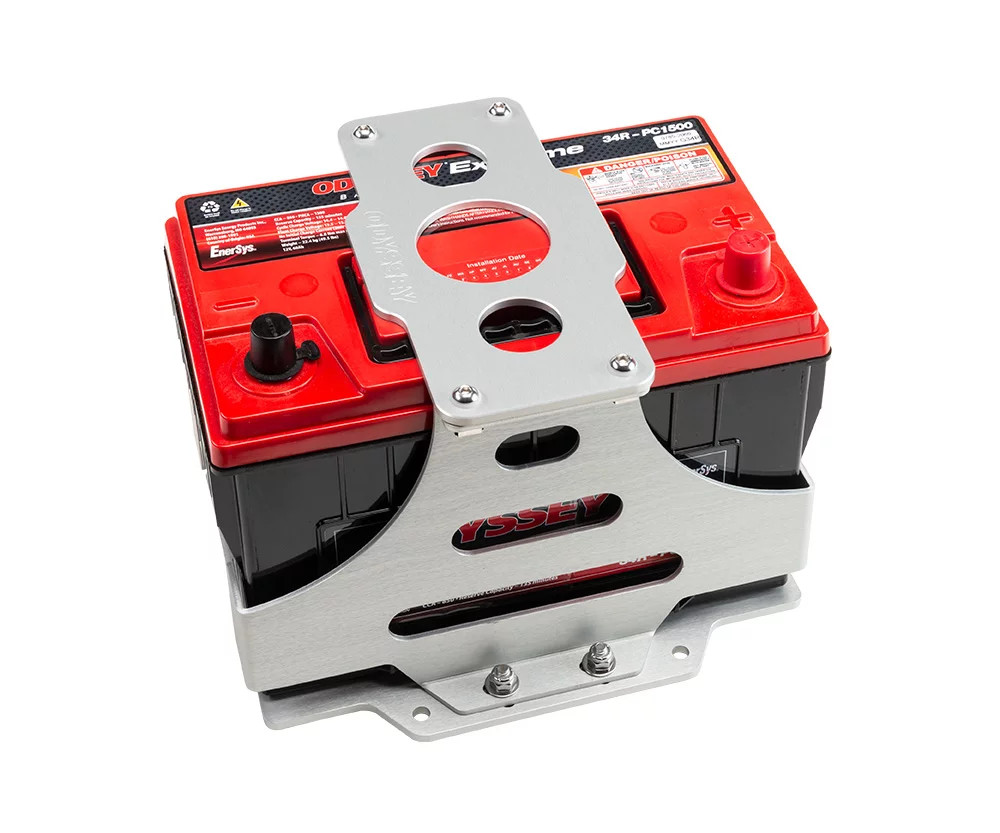
XPH’s ODYSSEY selection also includes application-specific mounting accessories. For example, the HK-PC1500 hold-down kit lists compatibility with specified AGM34, AGM78, and PC1500-family batteries without metal jackets.
That kit is a separate purchase and should be matched to the exact battery. It is not a universal mount for every ODYSSEY case.
For a custom installation, discuss the entire arrangement with a qualified installer, including secure mounting, cable routing, and charging compatibility.
Plan for the Time Between Drives
How you use the vehicle matters after installation, too.
A regularly driven car, a weekend project, and a vehicle that spends extended periods parked can place different demands on battery care. Review ODYSSEY’s charging and storage guidance for the exact model.
When a maintainer is needed, choose one compatible with the battery’s specified charging requirements. Include existing parasitic loads and the vehicle’s storage conditions in the discussion.
If battery problems recur, have the charging system and electrical draw checked. A replacement battery works best as part of an electrical system that is functioning correctly.
Giving those details attention helps make the battery purchase part of a complete ownership plan.
Find Your ODYSSEY Battery at Extreme Power House
A battery can be an overlooked part of a carefully developed vehicle. Choosing it with the same attention as the other components helps bring the whole project together.
From H6, H7, and H8 Performance batteries to Extreme options with different terminal arrangements, ODYSSEY gives owners several specifications to explore at XPH.
Start with the required fitment, compare the ratings, and select the product that suits the job.
Browse the ODYSSEY Battery selection at Extreme Power House and find the power source for your next drive.