
Evolution Racewerks: Supporting Hardware for Serious Turbo Builds
28th Sep 2026
Building a turbocharged performance car is rarely about one modification.
The turbocharger may be the headline component, but the surrounding hardware determines how effectively the engine can move air through the system. Charge pipes, intercoolers, turbo inlets, downpipes, and exhaust components all have a role in creating a more capable airflow path.
Evolution Racewerks has built its product range around these supporting components.
Its catalog covers turbocharged platforms from BMW, Audi, Volkswagen, Toyota, Alfa Romeo, and other applications, with products ranging from charge pipes and intercoolers to turbo inlets, downpipes, exhaust components, and brake lines. The current Evolution Racewerks catalog contains more than 100 products across these categories.
At XPH, that makes Evolution Racewerks particularly relevant for enthusiasts who are building beyond the factory airflow system and need hardware capable of supporting the rest of the build.
The Supporting Hardware Matters
A turbocharged engine is an airflow system.
Air enters through the intake, passes through the turbocharger, travels through the intercooler and charge piping, reaches the throttle body, and eventually enters the engine. Exhaust gases then leave the engine, drive the turbocharger, and continue through the exhaust system.
Every restriction or weak point along that route can become more relevant as the demands on the engine increase.
This is why supporting hardware deserves attention when increasing boost or upgrading other components.
Evolution Racewerks focuses heavily on these areas rather than trying to be everything to every type of performance build.
Charge Pipes Built for Turbocharged Applications
Charge pipes are among the most recognizable Evolution Racewerks products.
The company offers application-specific charge pipe solutions for turbocharged BMW platforms including N54, N55, N20/N26, B46/B48, and S55 engines, with current products also covering newer platforms.
These components replace or upgrade the factory connection between the turbo/intercooler system and the throttle body, depending on the specific application.
That becomes particularly relevant on vehicles where increased boost places greater demands on the original charge-air plumbing.
Evolution Racewerks also offers different configurations around factory-style diverter valves and other application-specific requirements, rather than relying on a universal pipe design.
The result is hardware designed around the actual engine and vehicle architecture.
Intercooler Capacity Becomes More Important as Boost Increases
Increasing boost does not only increase airflow requirements.
It also increases the amount of heat that must be managed.
The intercooler sits between the turbocharger and engine and is responsible for reducing the temperature of compressed intake air before it reaches the engine.
Evolution Racewerks offers both Sports Series and Competition Series intercooler solutions, with applications ranging from older Audi A4 platforms to BMW N54, N55, and other turbocharged engines.
The current catalog includes products such as Competition Series front-mount intercoolers for BMW applications and both front-mount and dual side-mount intercooler solutions for Audi A4 platforms.
For a modified turbo vehicle, intercooler selection therefore becomes part of the larger thermal-management strategy rather than simply an upgrade chosen in isolation.
Turbo Inlets: The Beginning of the Pressure Side
The hardware before the compressor matters as well.
Turbo inlet components connect the intake system to the turbocharger and can become an important consideration when the factory inlet geometry becomes a limitation for a higher-flow setup.
Evolution Racewerks offers turbo inlet products for applications including Audi's 1.8T engines and various BMW turbocharged platforms.
These products fit into the same philosophy as the company's charge pipes and intercoolers: address the individual sections of the turbocharged airflow path rather than treating the engine as though one component operates independently from everything around it.
Downpipes Change the Exhaust Side of the System
On turbocharged engines, the exhaust side of the turbocharger is equally important.
The downpipe connects the turbocharger to the remainder of the exhaust system, making its design relevant to exhaust flow, thermal management, and the overall configuration of the turbo system.
Evolution Racewerks offers both Sport Series high-flow catted downpipes and Competition Series catless downpipes across a variety of applications. Current offerings include BMW S55, S63, N55, N63, and S68 applications, among others.
The distinction between catted and catless configurations is significant.
A high-flow catted downpipe can provide a different balance of emissions equipment, exhaust flow, and intended use, while a catless configuration is generally aimed at competition or off-road applications where legally permitted.
The appropriate configuration depends on the vehicle, local regulations, and intended use.
Evolution Racewerks Covers More Than Older BMW Platforms
Evolution Racewerks has a particularly strong history within the BMW aftermarket, but its current product range is not limited to the classic N54 and N55 platforms.
The manufacturer's current catalog includes products for modern BMW applications such as the G87 M2, G80/G81 M3, G82/G83 M4, G42 M240i, G20 330i/M340i, and newer S68-powered vehicles.
Recent releases include a Competition Series mid-pipe for the G-chassis 330i/430i with the B46 engine, Sports Series resonated mid-pipes for the S58-powered M3/M4, and Competition Series primary and secondary downpipes for the S68-powered 760i xDrive.
That progression shows how the brand's product development has expanded alongside newer generations of turbocharged performance vehicles.
BMW Is a Major Focus, but Not the Whole Catalog
BMW enthusiasts make up a significant part of the Evolution Racewerks customer base, but the brand also supports other turbocharged platforms.
Current manufacturer offerings include applications for:
- BMW
- Audi
- Volkswagen
- Toyota
- Alfa Romeo
- MINI-related applications within the broader catalog
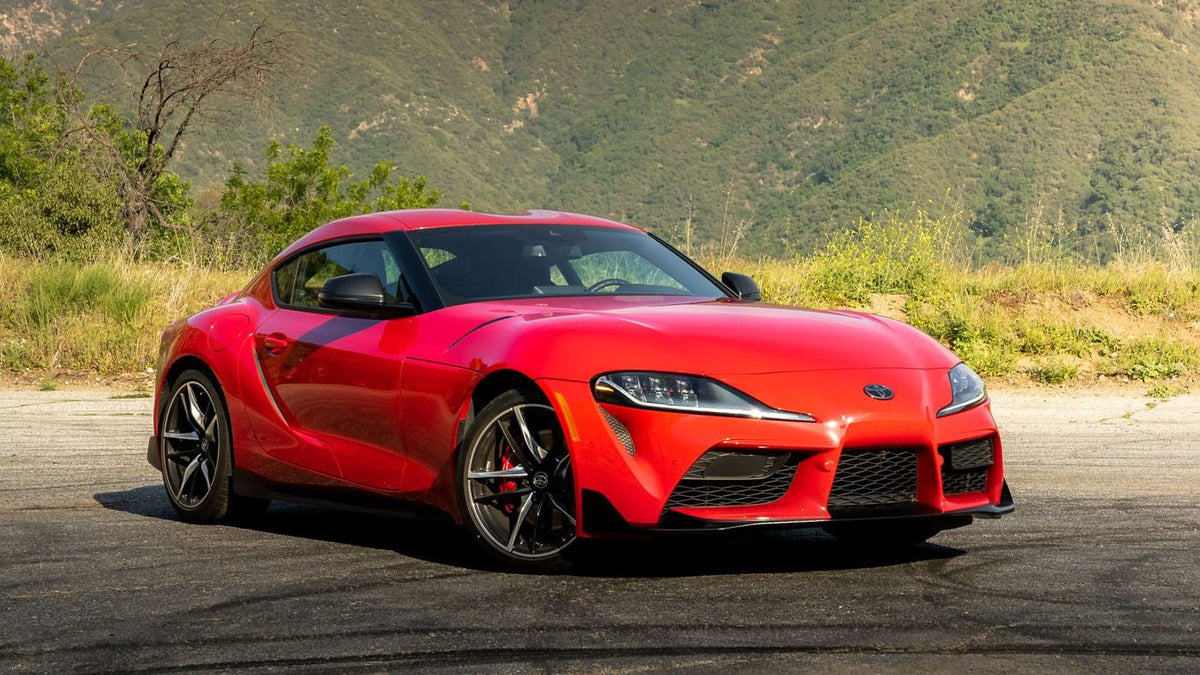
The Toyota GR Supra is among the newer platforms covered, including both 3.0 and 2.0 applications.
Audi and Volkswagen applications also remain part of the brand's range, including B5, B6, and B7 A4 turbo components and intercooler systems.
This makes Evolution Racewerks relevant to a broader group of turbocharged builds than its BMW reputation alone might suggest.
Matching the Hardware to the Build
One of the most important considerations when selecting Evolution Racewerks components is understanding where the vehicle sits in its modification progression.
A lightly modified street car may not require the same intercooler, charge-air plumbing, or exhaust configuration as a vehicle running substantially higher boost.
Likewise, a component designed for a competition-oriented build may not be the most appropriate choice for a daily-driven vehicle.
The goal is not to replace every factory component simply because an aftermarket alternative exists.
Instead, supporting hardware should be upgraded where the demands of the build justify it.
That can mean starting with a charge pipe on a known weak point, upgrading intercooling as heat becomes a concern, addressing turbo inlet restrictions, or changing the downpipe when the rest of the powertrain is ready for additional exhaust-flow capacity.
Building the Airflow Path as a System
The real value of Evolution Racewerks becomes clearer when its products are considered together.
A turbocharger upgrade can increase the amount of air the engine is capable of moving.
An appropriately sized intercooler can help manage the resulting intake-air temperatures.
Upgraded charge piping can provide a more robust connection between the turbocharger, intercooler, and engine.
A turbo inlet can address the compressor-side airflow path.
A suitable downpipe can complement changes made on the exhaust side.
None of these components should be selected without considering the others.
They are different sections of the same system.
From Street Cars to High-Power Builds
Evolution Racewerks products span a wide range of applications rather than targeting only dedicated race cars.
The catalog includes components for daily-driven BMWs, older turbocharged European cars, modern M cars, GR Supra builds, and substantially modified performance vehicles.
That range allows enthusiasts to upgrade according to the actual needs of their vehicle rather than following a single predefined build path.
For some cars, a charge pipe may be the logical first supporting modification.
For others, intercooling, turbo inlet flow, or exhaust-side upgrades may become more important as the build progresses.
Evolution Racewerks at XPH
Extreme Power House carries Evolution Racewerks hardware for enthusiasts looking to strengthen and improve the supporting systems around a turbocharged engine.
From BMW N54 and N55 builds to modern S55, S58, N63, and S68 applications, as well as Audi, Toyota, Volkswagen, and other supported platforms, the Evolution Racewerks catalog offers components for different stages of performance development.
Explore the full Evolution Racewerks collection at XPH and find the charge pipes, intercoolers, turbo inlets, downpipes, exhaust components, and other supporting hardware suited to your build: https://x-ph.com/brands/Evolution-Racewerks.html