
CSF Race Transmission Oil Coolers: Fitment Guide | XPH
16th Nov 2026
A BMW can feel strong on the first lap and still have a transmission temperature problem several laps later. A truck can behave the same way on a long climb with a trailer: the first mile feels normal, but the transmission spends much longer under load than it does on an ordinary commute. In both cases, the temperature that matters might be the one you are not watching.
CSF Race offers transmission oil coolers for both kinds of builds at Extreme Power House. The right choice starts with which fluid is getting hot, when it happens, and which transmission is in the car. These examples show how those questions change the parts you shop for, from an automatic BMW M3 to an F-150 that spends its weekends towing.
Start with the temperature you can actually measure
A transmission oil cooler helps transfer heat out of the transmission fluid. It does a different job from an engine oil cooler, an engine coolant radiator, or a heat exchanger for the charge-air circuit. If engine coolant looks normal but transmission fluid temperature climbs during repeated laps, a larger engine radiator may leave the issue you are trying to solve untouched.
If your car can display or log transmission fluid temperature, note what happens during the kind of driving that raises your concern. Look for a pattern rather than one number in isolation. Does the temperature climb after several laps and fall during a cooldown, or does it keep rising on a long grade? Compare similar conditions, and use the vehicle manufacturer's guidance for your transmission. If temperatures have changed on the same route with the same load, have the existing system inspected before choosing an upgrade.
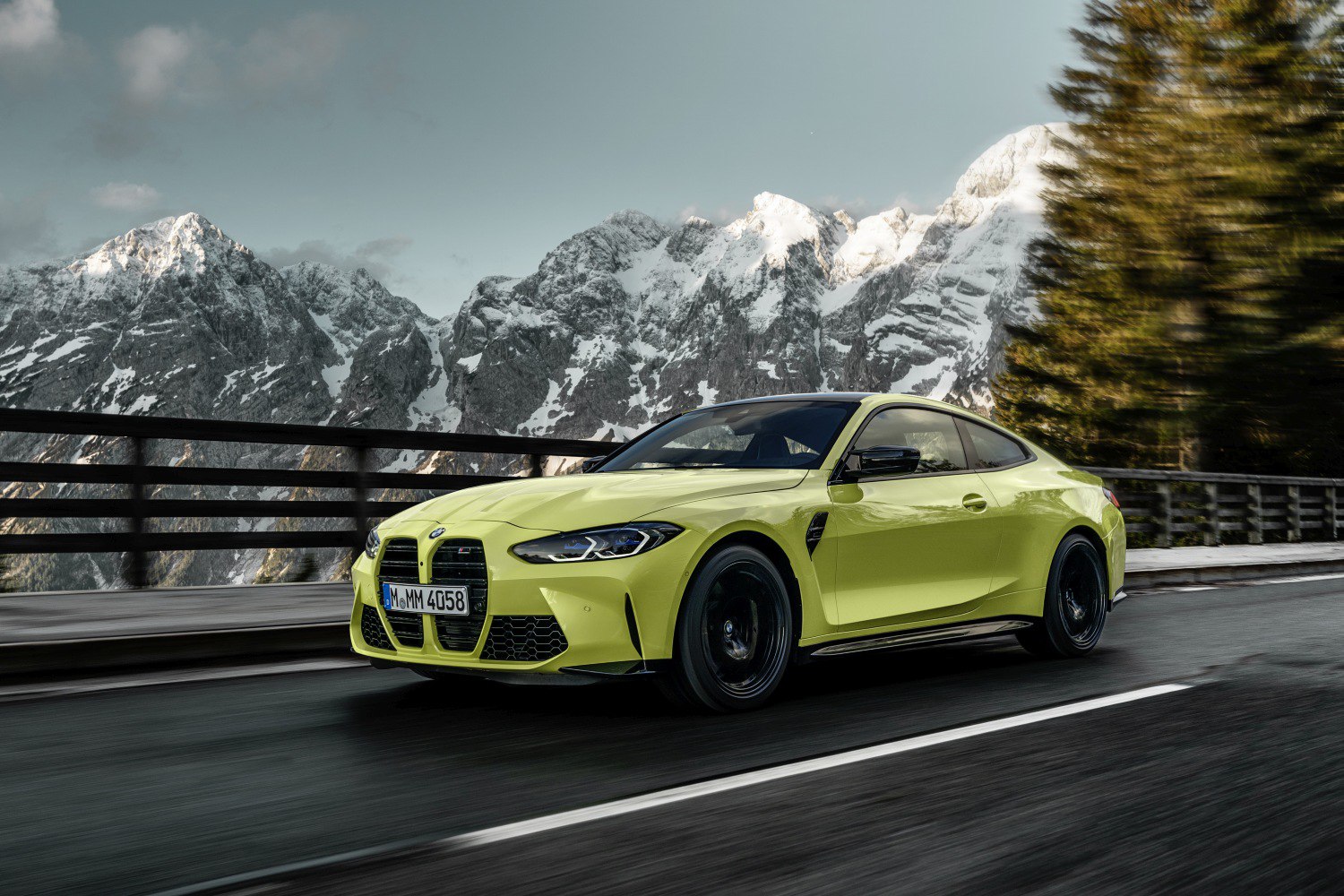
BMW G8X M3 and M4: match the cooler to the ZF8 automatic
The CSF #8221 transmission oil cooler is listed at XPH for ZF8 automatic versions of the G80 M3 and G82/G83 M4, including Competition applications. The model badge is only half the fitment check here: this cooler is for the automatic transmission, so the listing does not apply to a six-speed manual M3 or M4.
CSF's design routes fluid through a dual-pass core, keeps the factory quick-connect fittings, and includes a replaceable rock guard. The guard is a useful detail on a car that sees regular track time, where an exposed cooler may encounter debris. If your car has an aftermarket grille or other hardware in the same area, check the clearance with your installer. It is easier to confirm how those parts share space before the bumper comes off.
Toyota GR Supra and BMW B58: look up the original cooler
XPH lists a separate CSF #8183 transmission cooler for B58 applications. It is the listing to check for supported A90/A91 GR Supra 3.0 automatic applications and select B58 BMW G-Series cars. Even when two cars both use an eight-speed automatic, the cooler and its connections can differ.
The G20 M340i and G22 M440i illustrate why a model year alone can be misleading. CSF excludes late-production 2024 and 2025-onward M340i and M440i models equipped with the B58N from #8183 fitment. If your BMW is near the changeover, check the original transmission cooler part number or confirm it by VIN before ordering. For the Supra, verify the engine and automatic transmission rather than choosing from the A90/A91 name alone.
Jeep Wrangler and Gladiator: think about load and airflow
The CSF #8344 transmission cooler covers listed Jeep Wrangler JL and Gladiator JT applications. Examples include the 2018-2025 Wrangler JL 3.6L V6 and the 2020-2025 Gladiator JT 3.6L V6 with the compatible automatic. Check the full application notes if your Jeep uses another engine or drivetrain.
Slow off-road driving creates a different problem from a fast lap: the drivetrain can be working hard even when little air is moving through the front of the Jeep. CSF #8344 uses a dual-pass core and factory-style inlet and outlet connections. If your Jeep has a winch, auxiliary lights, or other equipment ahead of the cooling stack, check how much of the opening is still clear. A cooler's position and access to airflow matter alongside the size of its core.
Ford F-150 and SVT Raptor: shop by generation and engine
For supported 12th-generation F-150 applications, XPH lists the CSF #8101 transmission oil cooler. One specific example on the fitment list is the 2010-2014 F-150 SVT Raptor with the 6.2L V8. Use that application list to check your truck's year and engine rather than assuming a cooler for an early Raptor carries over to a newer one.
If towing prompted the search, take note of the conditions when the temperature rises: trailer load, outside temperature, route, and how long the truck has been climbing. That context helps you decide with your installer whether the cooler is the right upgrade and gives you a useful baseline for afterward. A transmission cooler helps manage heat within the vehicle's existing limits; it does not change the truck's rated towing capacity.
Set a baseline before you order
Record your chassis or platform, engine, transmission, and original cooler part number if the fitment calls for it. Note any parts that already occupy space near the cooler. After installation, ask your shop to check the fluid level and connections using the correct service procedure for the transmission. Then compare temperature behavior under similar conditions. A familiar route or a comparable session gives you more useful feedback than a quick drive around the block.
If several cooling upgrades are on your list, decide which temperature you want to address first. Changing one part at a time, where practical, makes it easier to see what helped and what still needs attention.
Shop CSF Race at Extreme Power House to compare transmission oil coolers and find the cooling hardware listed for your build.