
Building a Faster VW or Audi With Integrated Engineering
18th Aug 2026
Building a high-performance Volkswagen or Audi is rarely about one modification.
A larger turbo needs supporting airflow and fueling. More boost creates additional heat. More power places greater demands on the engine's internal components. And once the car becomes faster, suspension and chassis upgrades can become just as important as engine modifications.
Integrated Engineering approaches the aftermarket with that complete-build mentality.
Founded in 2007 in Salt Lake City, Utah, Integrated Engineering developed from a passion for Volkswagen and Audi performance into a manufacturer of engineered performance components spanning intake systems, intercoolers, engine hardware, fueling, suspension, tuning, and more.
At XPH, the IE catalog gives VW and Audi enthusiasts access to components for everything from responsive street builds to high-power turbocharged applications.
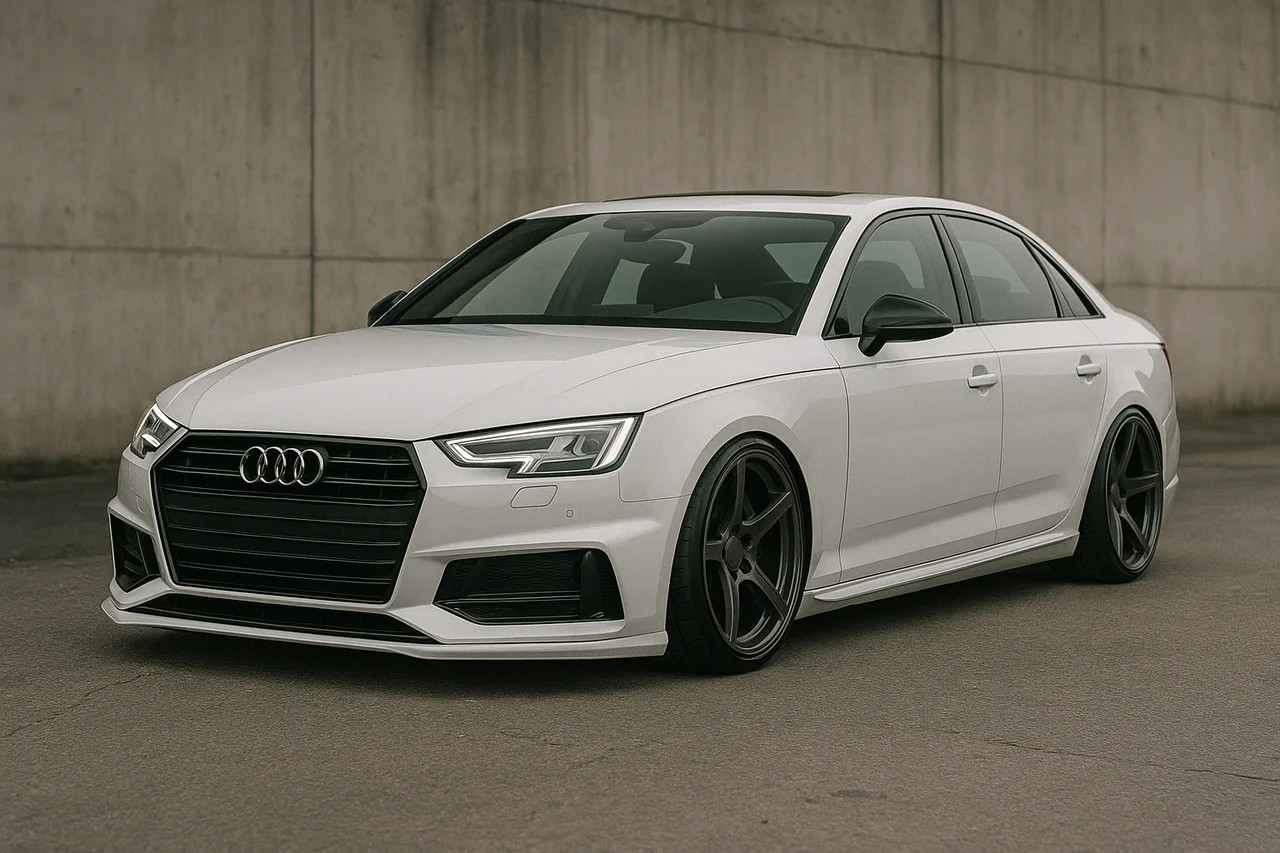
Engineering Comes Before the Upgrade
Integrated Engineering's philosophy is centered on engineering and testing rather than simply producing aftermarket replacements.
The company describes a development process involving digital design, prototyping, application testing, and in-house dyno work. Its higher-performance engine components, including connecting rods, camshafts, and valvetrain parts, undergo extensive testing to validate their performance before reaching customers.
That approach is important when modifying modern turbocharged engines.
A performance part needs to work as part of the larger system.
Airflow Is Where Many Builds Begin
Increasing engine performance starts with getting air into and out of the engine efficiently.
Integrated Engineering offers intake systems designed around specific Volkswagen and Audi platforms rather than relying on one universal design.
Examples in the XPH catalog include intake systems for platforms such as the Audi B8/B8.5 S4/S5 3.0T, Audi B9/B9.5 S4/S5 3.0T, Audi B9 A4/A5 2.0T, and MQB applications.
IE intake systems can incorporate features such as large high-flow filters, optimized inlet geometry, heat shielding, and high-volume airflow paths.
For turbocharged applications, improving the intake side can become increasingly important as boost and airflow requirements rise.
Turbo Inlet Upgrades
The intake does not end at the air filter.
The turbocharger inlet is another important restriction point, particularly on highly modified engines.
IE offers turbo inlet solutions designed to increase the available airflow into the turbocharger.
These upgrades can be especially useful when combined with a larger intake and performance calibration, where the engine's airflow requirements exceed what the factory components were designed to support.
Intercooling for Sustained Performance
More boost creates more heat.
That makes charge-air cooling an increasingly important part of a tuned turbocharged vehicle.
Integrated Engineering's FDS intercooler systems are designed around airflow distribution, cooling efficiency, and pressure-drop management. XPH carries IE intercooler applications for platforms including the Audi B9/B9.5 S4 and S5, along with compatible A4, A5, Allroad, SQ5, A6, and A7 applications depending on the specific intercooler configuration.
The objective is not simply to install a larger core.
An effective intercooler needs to maintain charge-air temperatures while minimizing unnecessary restriction.
That becomes increasingly important during repeated pulls, spirited driving, track use, and high-boost applications.
Moving Beyond Bolt-Ons
At some point, a serious build requires more than intake and cooling upgrades.
Fuel delivery becomes critical as airflow and power increase.
IE offers fueling hardware for Volkswagen and Audi applications, including high-pressure fuel pump upgrades and port-injection solutions.
For example, IE's 2.0T FSI HPFP upgrade is designed around the EA113 platform and provides increased fuel displacement for applications requiring additional fueling capacity.
IE also offers a 2.0T FSI/TSI port-injection manifold designed for EA113 and EA888 Gen 1/Gen 2 engines. The system adds provisions for secondary port fuel injectors to support builds that exceed the limitations of the factory direct-injection system.
These are the types of upgrades that become relevant when a build moves into higher-output territory.
Engine Internals for High-Power Applications
Adding power is one thing.
Building an engine capable of reliably supporting that power is another.
Integrated Engineering produces internal engine components for Volkswagen and Audi platforms, including forged connecting rods designed for high-boost and high-horsepower applications.
Its 2.0T EA888 Gen 1/Gen 2 connecting rods, for example, use forged 4340 chromoly construction and are designed to provide additional strength for heavily modified engines.
IE's engine hardware catalog also extends into areas such as:
- connecting rods
- camshafts
- valvetrain components
- valve springs
- performance valve stem seals
- engine hardware
- billet accessories
This gives builders options for strengthening the engine as the power target increases.
The 2.0T Platform
Few engines have as large a tuning ecosystem as Volkswagen and Audi's turbocharged four-cylinder platforms.
Integrated Engineering has extensive coverage across different generations of the 2.0T, including EA113 and EA888 applications.
That makes IE particularly relevant to owners building cars such as:
- Volkswagen GTI
- Volkswagen Golf R
- Volkswagen GLI
- Audi A3
- Audi S3
- Audi TT
- Audi TTS
- Audi A4
- Audi A5
- other compatible VW/Audi 2.0T applications
Exact product compatibility varies by engine generation, model year, drivetrain, and hardware configuration, so fitment should always be verified for the specific vehicle.
2.5T Five-Cylinder Performance
Integrated Engineering also develops components for Volkswagen and Audi's 2.5-liter five-cylinder platform.
One example is the IE 2.5L intake manifold, which uses a large plenum and optimized runner geometry to improve airflow distribution across the five-cylinder engine. The manifold is designed for both naturally aspirated and turbocharged builds, with additional gains possible when paired with compatible IE software.
The five-cylinder platform has become particularly popular for high-performance Audi builds, making supporting airflow upgrades increasingly important as power levels rise.
Audi 3.0T Performance
The supercharged 3.0T found in applications such as the B8/B8.5 Audi S4 and S5 has also become a major performance platform.
IE offers intake systems, fueling hardware, and tuning solutions for these vehicles.
XPH carries IE cold-air intake systems for the B8/B8.5 S4 and S5, including designs using large filters, optimized airflow paths, and heat-management features.
IE also offers complete performance packages for the 3.0T.
Its dual-pulley power kit for compatible S4, S5, SQ5, A6, and A7 applications combines hardware and ECU/DSG tuning as part of a larger Stage 2-style upgrade strategy.
This illustrates the broader IE philosophy: rather than treating each component as an isolated modification, the parts can be combined into a complete performance system.
Audi B9 and B9.5 Performance
The newer B9/B9.5 generation brings another group of popular IE applications.
For the 3.0T S4 and S5, IE offers intake and intercooling solutions designed to support both stock-turbo and upgraded-turbo builds. Its B9/B9.5 3.0T intake is designed to improve airflow while remaining compatible with progressively more advanced setups.
The B9 platform also benefits from IE's FDS intercooler technology, with applications spanning the S4/S5 and compatible four-cylinder models.
Performance Tuning
Hardware alone does not determine how an engine performs.
Once airflow, fueling, boost, or other major components are changed, the ECU calibration needs to account for those modifications.
Integrated Engineering's product range therefore includes performance software alongside its hardware.
This allows enthusiasts to build around a more coordinated combination of mechanical upgrades and calibration rather than treating the tune as an afterthought.
For some applications, IE offers complete packages combining hardware and software, such as its 3.0T dual-pulley power package.
Supporting the Entire Build
One of the biggest advantages of IE is the breadth of its catalog.
A typical progression might look like:
Stage 1 — Intake and airflow
Start with an intake, turbo inlet, or related airflow upgrade.
Stage 2 — Cooling
Add an intercooler or charge-air upgrade to control temperatures as boost increases.
Stage 3 — Fueling
Upgrade the HPFP or introduce additional fueling when the factory system becomes a limitation.
Stage 4 — Turbo and power upgrades
Move toward larger or upgraded turbochargers and the supporting hardware required to use them effectively.
Stage 5 — Engine reinforcement
For serious power targets, strengthen the engine with components such as forged connecting rods and valvetrain hardware.
Stage 6 — Chassis and drivability
Once power increases substantially, suspension and chassis upgrades can help the rest of the vehicle keep pace.
The exact progression depends on the platform and power target, but the principle remains the same: every modification should support the next part of the build.
Suspension and Chassis Components
Performance is not limited to the engine bay.
IE also develops suspension components for Volkswagen and Audi platforms.
For example, XPH carries IE front and rear sway bar upgrades for compatible B9 S4, S5, RS5, A4, and A5 applications.
These types of upgrades can help address body roll and chassis behavior, particularly when increased engine performance is combined with more aggressive driving.
A faster car still needs to put that performance to the ground effectively.
Designed for Street and Track Builds
Not every IE customer is building a drag car.
The catalog covers a wide range of applications, making the brand relevant to daily-driven street cars, weekend performance builds, autocross and track cars, and high-output turbo projects.
That versatility comes from having products at different levels of modification.
A driver can make targeted improvements without immediately committing to a complete engine build.
Why Integrated Engineering Fits Performance Builds
The defining feature of Integrated Engineering is not one particular intake, intercooler, manifold, or tuning package.
It is the ability to approach the vehicle as an engineered system.
Airflow affects turbocharger performance.
Turbocharger performance affects heat.
Heat affects consistency.
Increased airflow requires additional fueling.
Additional power increases the demands placed on the engine.
And once the power level rises, the chassis needs to be capable of controlling it.
IE's catalog is built around many of these relationships, which is why its products can be used individually or as part of larger Volkswagen and Audi performance builds.
Integrated Engineering at XPH
At XPH, we offer Integrated Engineering performance products for Volkswagen and Audi enthusiasts looking to build more capable, responsive, and reliable performance vehicles.
From cold-air intakes, turbo inlets, and intercoolers to fueling systems, engine internals, suspension components, manifolds, and tuning solutions, IE provides options for builds ranging from mild street upgrades to serious high-power applications.
Explore Integrated Engineering at XPH: https://x-ph.com/integrated-engineering/