
Antigravity Lithium Batteries & RE-START | Shop XPH
13th Oct 2026
When you plan your next upgrade, the battery may not be the first component that comes to mind. Yet for enthusiasts interested in reducing vehicle weight, it is an appealing place to look.
Antigravity Batteries develops lightweight lithium batteries for automotive, racing, motorcycle, and powersports applications. At Extreme Power House, you can shop the brand’s batteries and supporting accessories, including selected RE-START models, compact performance options, and battery monitoring products.
Whether you are refining a road car, preparing a dedicated competition vehicle, or upgrading the motorcycle parked beside your car, Antigravity offers several directions to explore.
Find a battery suited to your application and make an often-overlooked component part of a more thoughtful build.
An Upgrade You Can Measure on the Scale
Weight reduction is a satisfying part of a performance project because the result is tangible. You can compare the original component with its replacement and see exactly what changed.
An Antigravity lithium battery offers that opportunity. The brand’s automotive products are designed to provide starting power with substantially less weight than corresponding lead-acid batteries, with the actual saving depending on the models being compared.
That makes the battery worth considering alongside other weight-focused purchases. If you are selecting lighter wheels, refining the interior of a competition car, or simply taking a careful approach to the vehicle’s overall specification, the electrical system belongs in the discussion.
Start by checking the weight and capacity of the battery already installed. Then compare a suitable Antigravity replacement.
The aim is to select a battery that serves the vehicle’s electrical needs while contributing to your weight-reduction goal. That balance is what makes the purchase useful.
Lithium Technology with Battery Management Built In
Selected Antigravity products use lithium iron phosphate chemistry, commonly called LiFePO4, together with an onboard Battery Management System.
The BMS manages functions such as cell balancing and provides protections against conditions including excessive discharge, overcharging, and temperature limits. The precise protection features should be reviewed for the individual product.
For customers, this gives the battery another layer of functionality beyond its physical case and starting rating. The electronics are part of how the product manages its lithium cells during use.
That is especially relevant when comparing batteries for different applications. A full-size automotive battery, a compact powersports battery, and a dedicated race product may offer different capacities and operating features.
Antigravity’s range gives you choices across those categories, allowing the purchase to reflect the job the battery will perform.
What Antigravity’s RE-START Feature Adds
RE-START is one of Antigravity’s most distinctive features.
On equipped batteries, the system monitors discharge and can disconnect the battery before its energy is fully depleted, preserving a reserve intended to help restart the vehicle.
The activation method depends on the product. Selected automotive RE-START models use a wireless keyfob, while powersports models may use a button on the battery.
For an owner, the appeal is straightforward: the battery incorporates a reserve-start function that can be useful following a discharge event. It is a feature worth considering when comparing replacement options.
The reserve still depends on the battery’s condition and the circumstances of the discharge. Follow the instructions for the exact model and address any underlying electrical issue that caused the battery to drain.
Choose a RE-START product if that feature fits your priorities, then review the capacity and fitment alongside it.
Group 35/Q85: An Automotive Option Available at XPH
The Antigravity Group-35/Q85 Lithium Car Battery is one automotive option in the Extreme Power House selection.
The listing specifies 40Ah capacity, 1,500 cranking amps, a built-in BMS, and wireless RE-START activation. Its published case dimensions are 9 x 6.85 x 8.6 inches.
Those details give shoppers a concrete starting point. Compare the battery with the vehicle’s required group size, tray dimensions, terminal arrangement, and electrical needs.
Battery fitment extends across different makes and models, so the correct group designation matters more than assuming one battery belongs to an entire brand. A vehicle requiring a Group 35/Q85 configuration should still be checked against the manufacturer’s application information.
For a compatible installation, this product offers the combination that attracts many enthusiasts to Antigravity: lithium construction, a lighter replacement direction, and RE-START functionality in an automotive case format.
Group 26 and Other Application Choices
XPH also lists the Antigravity Group 26 Lithium Car Battery with RE-START, giving customers another automotive format to explore.
This reinforces the importance of starting with fitment. The battery must work with the tray, hold-down, cables, terminal positions, and capacity requirements of the vehicle.
The same model name can use different batteries depending on the year, engine, market, or equipment. Confirm the specification for the particular vehicle before choosing a replacement.
Antigravity provides a battery finder and sizing guidance to help identify suitable options. Use that information alongside the individual product specifications when comparing batteries sold at XPH.
Once the application is established, you can focus on the features that matter most to you: capacity, weight, starting capability, and whether RE-START is included.
Powersports Fitments: Match the Original Battery Reference
Antigravity’s powersports range offers several replacement formats for motorcycles and related vehicles.
Examples available at XPH include:
- ATX12 RE-START: for listed YTX12 replacement applications.
- AT12BS RE-START: for listed YT12-BS replacement applications.
- ATX20 RE-START: for listed YTX20-series applications.
- ATX30 RE-START: for listed YTX30 and specified related applications.
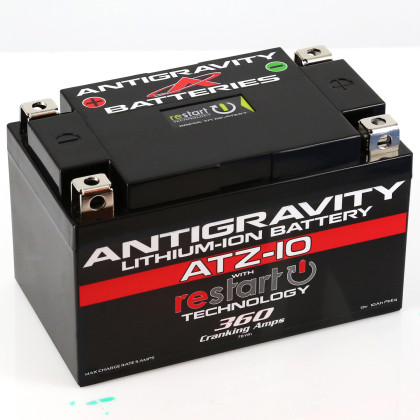
- ATZ7 and ATZ10 RE-START: additional compact battery formats with their own fitment requirements.
These products serve different case sizes and electrical specifications. Match the original battery reference and check the manufacturer’s vehicle fitment before selecting a model.
For an enthusiast who owns a motorcycle as well as a performance car, this makes Antigravity a brand worth exploring across the garage. You can shop for a lightweight starting battery while choosing each product around its own application.
Compare Standard and Heavy-Duty Versions Carefully
Selected Antigravity powersports models offer heavy-duty versions with additional capacity or starting output.
For example, the AT12BS-HD RE-START listing specifies 8Ah actual capacity and 480 cranking amps, compared with 6.1Ah actual capacity and 360 cranking amps for the standard AT12BS RE-START.
That gives customers a useful comparison within a similar case format. Review the additional capacity against the intended application and the specifications required by the vehicle.
Feature differences matter as well. The ATX20-HD listing specifically states that it does not include RE-START, even though other heavy-duty products in the range do.
Choose by the complete specification rather than the HD designation alone. Capacity, case size, starting output, and reserve-start functionality are separate factors in the decision.
A Compact Race Battery Requires a Different Plan
Compact batteries appeal to competition builders because packaging and weight can be major priorities.
Antigravity’s ATX20 RE-START, for example, is listed at 3.8 pounds, with 680 cranking amps and 10Ah actual capacity. Its compact dimensions make it relevant to specified powersports and racing applications.
The product listing advises against using it as a general street-car battery because of its lower amp-hour capacity. That is an important distinction when comparing a small race-oriented product with an automotive replacement.
A dedicated competition vehicle may have a very different electrical load and parking routine from a road car with alarms, control modules, and accessories.
Build the battery choice around those demands. For a street vehicle, explore an appropriately specified automotive model. For a race project, evaluate the compact option within the complete electrical and charging setup.
The H6/Group 48 16V Battery Is a Dedicated Race Product
The Antigravity range sold at XPH includes an H6/Group-48 16V Lithium Race Car Battery.
Its H6 case designation describes the physical format, while its 16V electrical specification defines a separate application requirement. It should be selected for a race system designed to use that voltage.
This product also omits RE-START, giving customers another reminder that the brand’s features vary by model.
For builders developing a dedicated race car, it is an option to review alongside the charging equipment, electrical components, and event requirements.
Check voltage before comparing case size. Two batteries can share a familiar physical designation while serving different electrical systems.
Battery Monitoring and Installation Accessories
A well-planned battery upgrade includes the supporting details.
The Antigravity selection at XPH includes products such as the Bluetooth Battery Tracker PLUS, terminal covers, terminal adapters, a foam kit, and selected replacement accessories.
A compatible monitoring product gives owners another way to review battery status. Check the tracker’s chemistry and voltage compatibility before adding it to the order.
Terminal adapters address specific connection arrangements, while installation accessories should be selected around the battery and mounting setup. Secure retention and correctly matched terminals remain part of a complete installation.
These products can help you plan the purchase as a package. Choose the battery first, then identify the accessories genuinely required for the vehicle.
Choose the Right Charging Equipment
Lithium battery ownership includes selecting suitable charging equipment.
Antigravity provides charger guidance for its batteries, and the appropriate choice depends on the product’s chemistry, voltage, and capacity. Follow the manufacturer’s instructions for the exact battery rather than assuming an existing charger is compatible.
For a vehicle that spends time parked, consider its electrical draw as well. Alarms, control modules, and accessories can continue using energy while the engine is off.
The installation requirements of modern vehicles also matter. Where battery registration or coding is required, follow the applicable vehicle and battery guidance.
A correctly selected battery, suitable charging equipment, and proper installation give the upgrade a practical foundation.
Shop Antigravity Batteries at Extreme Power House
Antigravity gives enthusiasts a distinctive way to approach a battery upgrade: choose starting hardware that can also contribute to weight reduction and, on selected models, provide RE-START functionality.
Extreme Power House offers Antigravity products across automotive, powersports, and racing applications, together with supporting accessories.
Start with the correct fitment, confirm the capacity and voltage, and compare the features of the exact model. Whether your next project lives on the road, in the paddock, or on two wheels, explore Antigravity at XPH and find the battery that belongs in your build.
Shop Antigravity Lithium Batteries and Accessories at Extreme Power House