
Antigravity Lithium Batteries for Cars, Motorcycles & Racing | XPH
6th Oct 2026
A performance build deserves a battery that fits the vehicle, the way you use it, and the space available under the hood or seat. Antigravity Batteries brings lithium battery options to automotive, powersports, and racing applications, with selected models featuring RE-START technology and a range of supporting accessories. Explore the Antigravity collection at Extreme Power House to find the right starting point for your next build.
Whether you’re replacing a conventional automotive battery, looking for a compact powersports option, or preparing a dedicated race car, the Antigravity range gives you different formats to consider. XPH carries automotive group-size batteries, motorcycle and powersports batteries, a 16V race battery, battery trackers, chargers, terminal adapters, and other essentials.
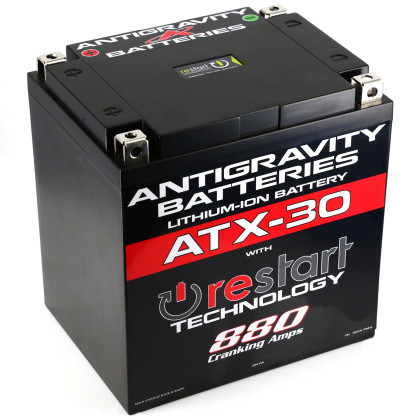
Antigravity Batteries for Different Vehicles and Builds
The right battery depends on more than the brand. Battery group size, voltage, terminal arrangement, physical dimensions, capacity, and starting requirements all need to match the application. Antigravity’s range covers several types of use, so start by identifying what your vehicle requires.
For automotive projects, the collection includes the Group 26 RE-START lithium car battery and a Group 35/Q85 lithium car battery. A Group 26 format can be a useful reference point when checking a car that uses that battery size, while Group 35/Q85 serves a different battery-size application. Always compare the dimensions, terminal layout, electrical requirements, and product specifications with your vehicle before choosing a replacement.
For powersports applications, XPH carries compact options such as ATZ7, ATZ10, ATX12, ATX20, ATX30, AT12BS, and AT7B-BS models, including select RE-START and Heavy Duty variants. These models are intended for different battery-size and power requirements across motorcycles and other powersports vehicles. Use the manufacturer’s application guidance and the specifications for the exact model when selecting a replacement.
For race applications, the collection includes an H6/Group-48 16V lithium race battery. A 16V battery is intended for a specific racing electrical setup, so it should only be selected when the vehicle and its electrical system are designed for that voltage. It is not a direct substitute for a standard 12V battery.
RE-START: An Added Starting-Support Feature
Selected Antigravity RE-START batteries include a built-in feature designed to help when the battery’s charge gets too low. The battery management system can place the battery into a sleep state before it is fully depleted, preserving enough reserve to attempt a restart using the battery’s RE-START control. Some models support remote activation; controls and operation vary by product.
That additional feature can be appealing for vehicles that sit between drives or for owners who want an extra starting option built into a compatible battery. It’s still important to maintain and charge the battery as directed. RE-START is a reserve feature, not a replacement for proper battery care, a suitable charger, or diagnosing an underlying charging-system problem.
Not every Antigravity battery listed at XPH includes RE-START. The range also includes Heavy Duty, non-RE-START, 6V, and 16V race models. Check the exact product name and description so you know which features are included.
Choose the Right Antigravity Battery Family
Automotive Group-Size Batteries
If you’re choosing a replacement for a car or truck, begin with the group size and the vehicle’s original specifications. The XPH collection includes Group 26 RE-START and Group 35/Q85 lithium batteries, along with the H6/Group-48 16V race battery for specialized racing applications.
Group-size labels help narrow the search, but they don’t confirm every detail. Check the product dimensions, terminal locations, hold-down requirements, voltage, and charging compatibility. A battery can appear to be a similar size while still having terminals or specifications that don’t work for a particular vehicle.
Powersports and Compact Batteries
Motorcycles and powersports vehicles often use smaller battery cases, and fitment can depend on the original battery model and available space. The Antigravity ATZ and ATX series at XPH give riders different compact lithium options to compare, including RE-START and Heavy Duty versions for selected models.
When selecting a powersports battery, check the original battery code, polarity, terminal layout, dimensions, cranking requirements, and any special needs from the vehicle manufacturer. A compact battery should be chosen for the exact machine and intended use, not simply because it fits inside the battery compartment.
Racing Applications
For dedicated race setups, Antigravity’s H6/Group-48 16V lithium race battery is a specialized option within the range. Confirm that the car’s electrical system and components are designed for 16V operation before selecting it. If your build uses a conventional 12V system, choose a compatible 12V model instead.
Accessories to Complete the Setup
XPH also offers accessories to help support battery installation, monitoring, charging, and portable starting. Depending on your setup, you can explore:
- Battery trackers, including Bluetooth and lead/acid monitoring options, to help keep an eye on battery status.
- Battery chargers, with separate offerings for different battery types and voltages.
- Terminal adapters, including top-post to side-terminal, square-to-round, and SAE options, for compatible connections.
- Terminal covers and foam kits to support a clean, protected installation where applicable.
- Portable Micro-Start accessories, such as SMART clamps, heavy-duty clamps, and a clampless starting harness for compatible XP10 models.
Accessories are specific to their intended battery, charger, or starter model. Check the product page before adding an accessory to your setup, especially where voltage and connector type matter.
Why Consider an Antigravity Lithium Upgrade?
A battery swap is one of those upgrades that works in the background every time you turn the key. Enthusiasts look to lithium batteries for a compact, lightweight alternative to traditional lead-acid formats, while selecting the case and electrical specifications that suit their car or powersports vehicle. Antigravity’s automotive, motorcycle, and race battery families are designed for different applications, so choose by the product details instead of expecting one battery to cover every vehicle.
On a street car, the priority may be finding a suitable replacement in the correct group size. On a motorcycle, compact dimensions and terminal orientation can matter just as much as starting requirements. On a race build, the battery may need to fit a purpose-built electrical system and save space or weight. Antigravity’s collection at XPH offers distinct options for these types of projects, along with supporting accessories.
A good battery choice balances fit, starting needs, charging compatibility, and how the vehicle is used. If the vehicle sits for extended periods or has added electrical equipment, consider those conditions when evaluating your setup. Check the manufacturer’s recommendations for maintenance and charging, and address parasitic draw or charging-system issues instead of expecting a new battery to compensate for them.
Match the Battery to Your Build
Use your original battery label as a starting point, then verify the size and requirements against the new product. For a car or truck, note the group size and terminal layout. For a motorcycle or powersports vehicle, record the original battery code and dimensions. For a race application, confirm system voltage and any battery-management requirements.
Then consider which extra features would be useful. If you’re interested in RE-START, make sure the exact battery model includes it and check how that model’s restart control works. If you want to monitor a battery, compare the Bluetooth Battery Tracker PLUS and the lead/acid Battery Tracker with the type of battery you own. If you’re selecting a charger, match the charger to the battery’s chemistry and voltage.
This step-by-step approach makes it easier to compare models and accessories without overlooking the details that determine whether a battery works in your vehicle. If the product page leaves a question open, share the original battery code and vehicle details with XPH before ordering.
How to Check Antigravity Battery Fitment
Before ordering, gather the following details for your vehicle:
- Year, make, model, trim, and engine
- Original battery group size or powersports battery code
- Battery dimensions and terminal orientation
- Required voltage and starting specifications
- Charging-system and chemistry compatibility
- Whether your application is street, powersports, or dedicated race use
Then compare those details with the product listing and manufacturer guidance. Don’t rely on group size alone, particularly if the vehicle has been modified or uses a nonstandard battery configuration. For lithium replacements, also follow the manufacturer’s charging instructions and use a charger intended for the battery chemistry and voltage.
If you’re unsure which model fits, contact Extreme Power House with your vehicle information and the original battery code. That gives us a clearer starting point for helping you find a compatible option.
Find Your Antigravity Setup at Extreme Power House
From automotive group-size replacements to compact powersports models and specialized race batteries, Antigravity offers several battery formats for different needs. Add a compatible tracker, charger, terminal adapter, or starting accessory to complete the setup.
Ready to choose your battery? Shop Antigravity Batteries at Extreme Power House to explore the current range and find the product that matches your vehicle and build.