
6 Valvetronic Exhaust Systems for Porsche, McLaren & Lamborghini | X-PH
28th Oct 2026
A performance exhaust can completely change the personality of a car.
But the right exhaust for a Porsche Cayenne is not necessarily the right exhaust philosophy for a McLaren 765LT.
A Lamborghini Murciélago V12 demands something different again.
That range is exactly what makes the latest Valvetronic Designs exhaust systems now available through Extreme Power House so interesting.
The six additions cover everything from a refined, valve-controlled V8 SUV exhaust to lightweight titanium McLaren race systems and an uncompromising straight-through exhaust for Lamborghini’s new Temerario.
The new lineup includes the Valvetronic Designs Valved Sport Exhaust for the Porsche 9Y0 Cayenne 4.0T V8, F1 Valved Exhaust for the Porsche 991.2 GT2 RS, F1 Race systems for the McLaren 750S and 765LT, a Valved Sport Exhaust for the Lamborghini Murciélago and LP640, and the non-valved F1 Race Exhaust for the 2025–2026 Lamborghini Temerario.
These are six very different vehicles.
Valvetronic’s goal across all of them is similar:
Improve the sound, reduce unnecessary restriction, and build the exhaust around the character of the vehicle.
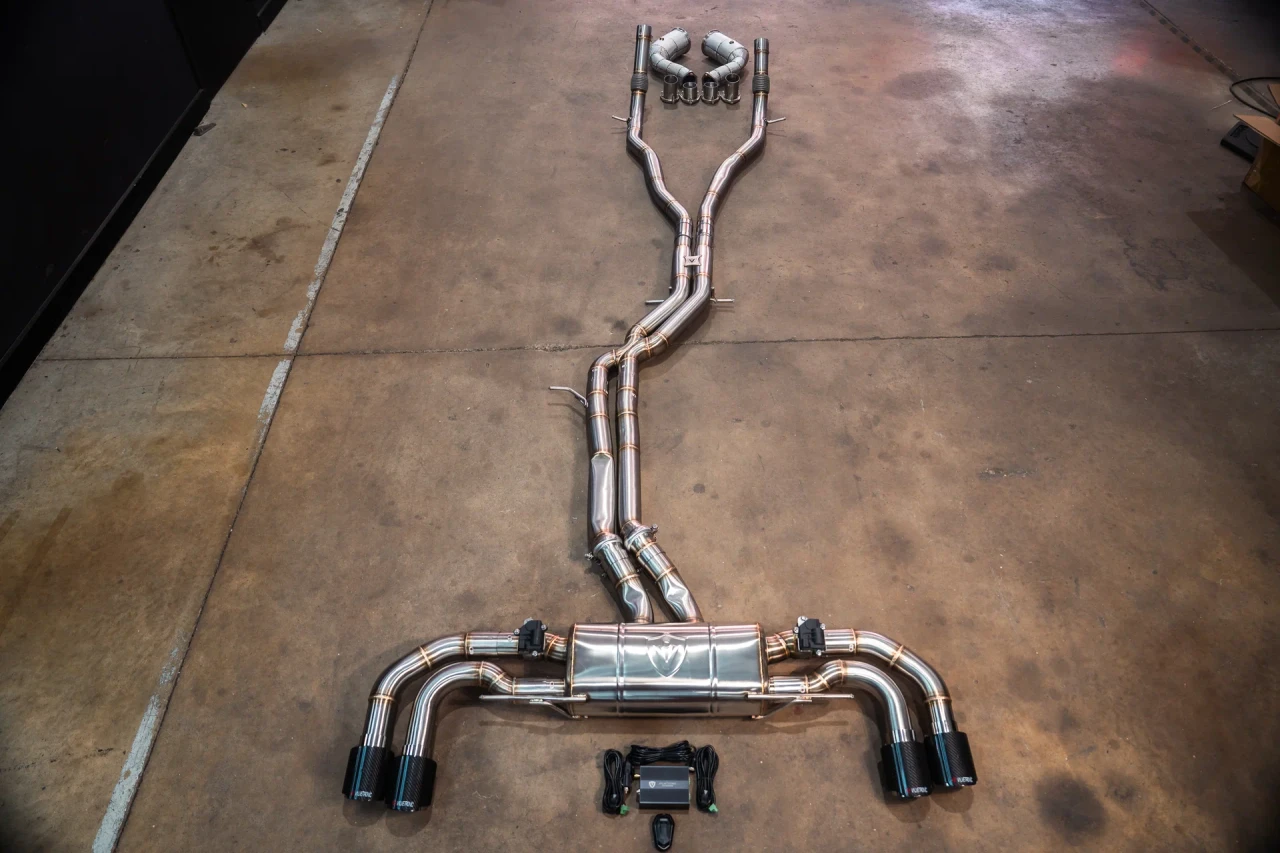
Valvetronic Valved Sport Exhaust for Porsche 9Y0 Cayenne 4.0T V8
The Porsche Cayenne has always occupied an unusual position in the performance world.
It needs to function as a practical luxury SUV while still delivering the response and character expected from a Porsche.
For owners of the 2018+ 9Y0 Cayenne equipped with the 4.0L twin-turbocharged V8, the Valvetronic Designs Valved Sport Exhaust follows that same dual-purpose philosophy.
Instead of turning the Cayenne into an SUV that is permanently loud, the system uses the vehicle’s factory electronic exhaust-valve functionality to give the driver distinctly different personalities.
Quiet When the Cayenne Needs to Be Civilized
With the valves closed, Valvetronic engineers the system around a more subdued exhaust note suited to normal cruising.
That matters on a Cayenne.
This is a vehicle that may spend hours on the highway, carry passengers, or serve as a daily driver.
A performance exhaust that creates constant drone can quickly become tiring in that environment.
Valvetronic uses a quad-chambered muffler design specifically intended to help manage unwanted frequencies while retaining a sportier exhaust character when requested.
Open the Valves for the V8
When the valves open, the character changes.
The system allows more of the 4.0T V8’s exhaust note to come through, creating a deeper and more aggressive sound as throttle input increases.
That gives owners more flexibility than a fixed exhaust.
One vehicle can remain comfortable during a commute and significantly more expressive during spirited driving.
Factory Electronic Valve Integration
Unlike some aftermarket systems that rely on an independent remote-controlled valve setup, the Cayenne system integrates with the factory electronic exhaust valves.
Valvetronic highlights rapid valve opening and closing as part of the system’s operation.
For a modern luxury-performance SUV, maintaining that factory-style integration makes a lot of sense.
Larger-Diameter Exhaust Piping
Valvetronic also uses larger-diameter piping intended to improve exhaust flow and support throttle response compared with the original arrangement.
This is an important part of the exhaust’s performance-oriented design.
The objective is not only to alter sound.
The system also changes the path through which exhaust gases leave the engine.
T304 Stainless Steel Construction
The Cayenne system is constructed from T304 stainless steel.
T304 is widely used in premium performance exhaust systems because of its corrosion resistance, durability, and ability to withstand repeated heat cycling.
For a daily-driven SUV that may see rain, winter conditions, long trips, and repeated temperature changes, long-term material durability is especially important.
Direct Bolt-On Installation
Valvetronic lists the system as a direct bolt-on installation with no cutting or welding required.
That allows the exhaust to fit into the Cayenne without permanent fabrication to the vehicle.
Professional installation is still a sensible choice on a vehicle at this level.
Cayenne Fitment
The exhaust is listed for:
2018+ Porsche Cayenne 9Y0
4.0T V8 engine
Exact model year, trim, exhaust configuration, and factory valve equipment should be confirmed before ordering.
Item link: Valvetronic Valved Sport Exhaust for Porsche Cayenne 9Y0 4.0T V8
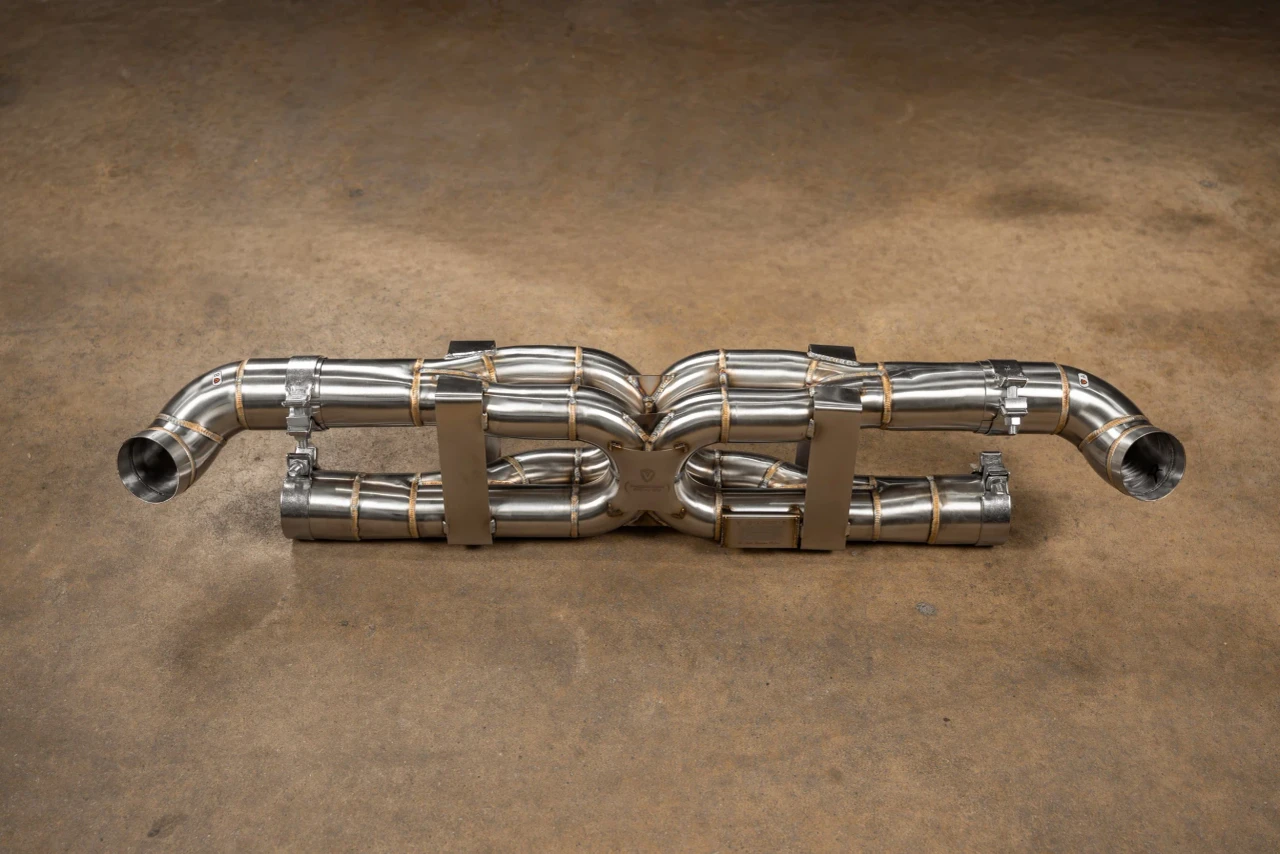
Valvetronic F1 Valved Exhaust for Porsche 991.2 GT2 RS
From Porsche’s performance SUV, the next system moves to almost the opposite extreme.
The 2018–2019 Porsche 911 GT2 RS 991.2 combines a 3.8L twin-turbocharged flat-six with rear-wheel drive and a chassis built around extraordinary performance.
Valvetronic’s exhaust retains adjustable sound control while giving the GT2 RS a more aggressive exhaust path.
2.5-Inch Tubing From Inlet to Outlet
The GT2 RS system uses 2.5-inch mandrel-bent tubing throughout the exhaust path.
Maintaining the same diameter through smooth mandrel bends helps prevent unnecessary restrictions at tighter sections of the routing.
Valvetronic pairs that tubing with high-flow exhaust routing designed for the demands of the twin-turbo flat-six.
Open Valves for the Raw GT2 RS Character
With the exhaust valves open, the system is designed to expose substantially more of the flat-six’s character.
That makes sense on a GT2 RS.
This is not a car whose identity is built around quiet isolation.
The exhaust is intended to make the driving experience feel more immediate and more closely connected to the engine.
Close the Valves for Cruising
The other side of the system remains available when the additional sound is not wanted.
Close the valves and exhaust volume drops for normal cruising, residential driving, or quieter starts.
For a road-legal car with this level of performance, that additional flexibility can make the exhaust much easier to live with.
Vacuum-Operated Exhaust Valves
The GT2 RS system uses vacuum-operated valves controlled through a supplied key-fob remote.
The driver therefore has direct control over the two exhaust personalities rather than relying only on vehicle operating modes.
T304 Stainless Steel and TIG-Welded Construction
Valvetronic builds the GT2 RS system from brushed T304 stainless steel.
The tubing is fully mandrel bent and the joints are precision TIG welded.
The system finishes with brushed single-wall Valvetronic exhaust tips.
The result combines durability and corrosion resistance with a raw, motorsport-oriented appearance.
Compatible With OEM or Aftermarket Downpipes
Valvetronic designs the exhaust to connect to compatible factory or aftermarket downpipes.
That makes the cat-back relevant to both relatively stock GT2 RS builds and cars that have already received other exhaust modifications.
Downpipe compatibility should still be verified before ordering.
GT2 RS Fitment
The system is specifically listed for:
2018 Porsche 911 GT2 RS – 991.2
2019 Porsche 911 GT2 RS – 991.2
3.8L twin-turbocharged flat-six
Rear-wheel drive
The complete package includes the exhaust system, vacuum valve hardware, key-fob controller, wiring harness, clamps, and necessary installation hardware.
Item link: https://x-ph.com/valvetronic-designs-exhaust-system-for-porsche-991-2-gt2rs/?showHidden=true
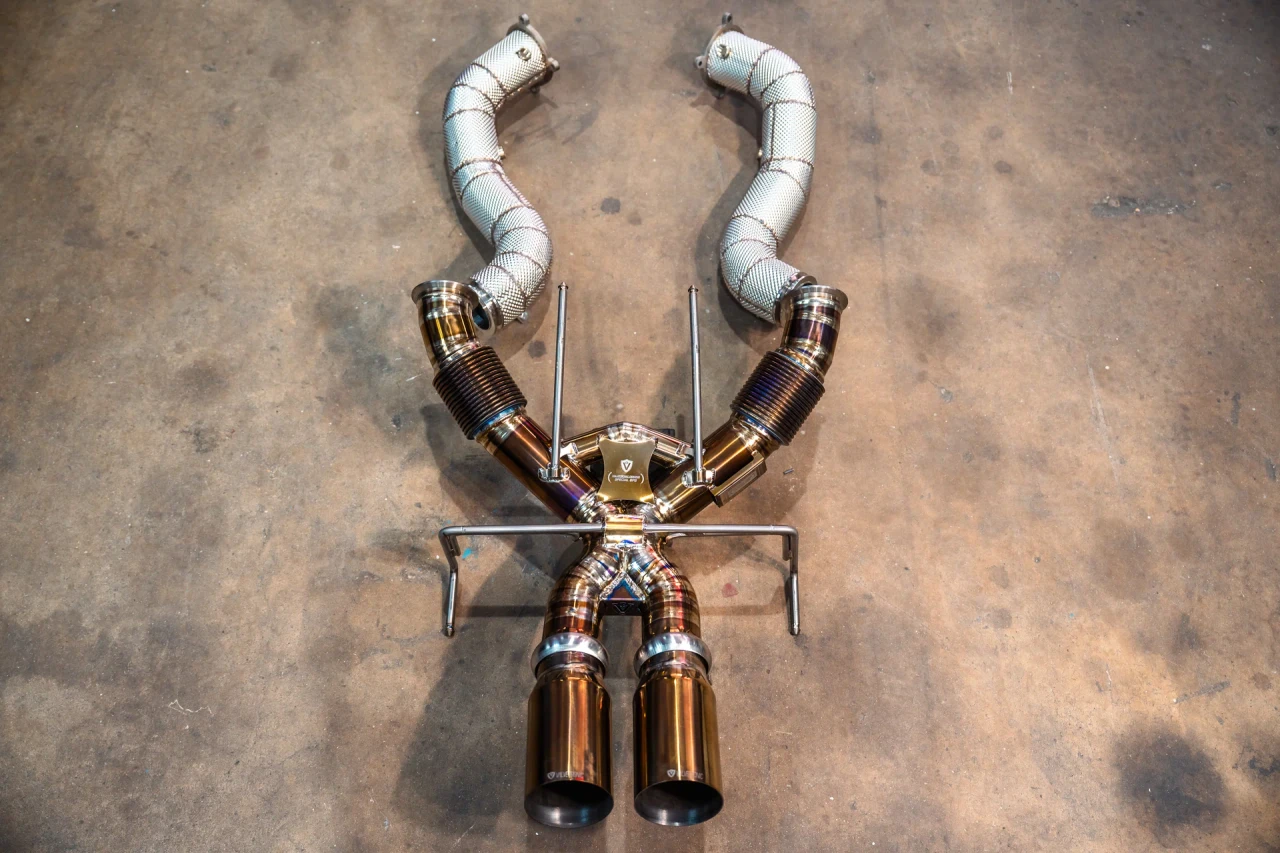
Valvetronic McLaren 750S F1 Race Exhaust System
The 2024+ McLaren 750S represents a different exhaust challenge.
Its 4.0L twin-turbocharged V8 produces tremendous performance, but turbochargers naturally absorb some of the engine’s exhaust energy before it ever reaches the tailpipes.
Valvetronic’s answer is an F1 Race Exhaust System constructed from Grade 5 titanium, with the emphasis placed firmly on high-frequency sound, reduced mass, and motorsport character.
Developed From the 765LT F1 Program
The 750S system is based on engineering developed through Valvetronic’s McLaren 765LT F1 exhaust program.
That connection is important because the two McLarens have related performance architecture but different packaging and exhaust requirements.
Valvetronic adapts the underlying sound-development philosophy to the newer 750S.
Grade 5 Titanium Construction
The complete system uses Grade 5 titanium.
Titanium offers an excellent combination of low mass, heat resistance, and strength, making it particularly appropriate for a mid-engine supercar where reducing exhaust weight can be meaningful.
The reduced mass is also positioned high and toward the rear of the vehicle, making weight reduction in the exhaust system particularly attractive.
Hybrid HP Crossover and X-Pipe
One of the defining pieces of the McLaren system is its hybrid HP crossover and X-pipe architecture.
Valvetronic uses the crossover arrangement not simply to move exhaust gases but to manipulate how pulses from the two sides of the engine interact.
That helps shape the exhaust frequency and character.
The result is intended to create a sharper and more exotic tone than the standard exhaust configuration.
High-Frequency Race Sound
Valvetronic specifically targets an aggressive, high-frequency racing exhaust note with the 750S system.
Instead of emphasizing a deep V8 rumble, the design is intended to pull the sound toward a sharper, more motorsport-oriented character.
That is a significant part of the “F1 Race” philosophy.
Dual Straight-Cut Titanium Tips
The 750S system exits through dual straight-cut titanium tips.
The simple straight-cut design fits the system’s race-oriented character rather than trying to imitate a more decorative luxury exhaust outlet.
Optional Titanium Race Pipes
Owners looking for an even more aggressive configuration can add optional titanium Race Pipes.
Valvetronic states that the optional Race Pipe configuration further increases exhaust aggression and can increase the potential for visible flames.
That characteristic applies specifically to the appropriate Race Pipe configuration—not simply to every installation of the base exhaust.
Emissions and road-use legality should be confirmed before installing race-oriented exhaust components.
Direct Bolt-On Design
Despite its exotic materials and race-focused sound, Valvetronic lists the system as a direct bolt-on fit for the intended 750S application.
Professional installation is strongly recommended because of the vehicle’s packaging, heat management, and value.
McLaren 750S Fitment
The exhaust is listed for:
2024+ McLaren 750S
Customers should confirm which configuration is being ordered and whether the optional Race Pipes are included or purchased separately.
Item link: https://x-ph.com/valvetronic-mclaren-750s-f1-race-exhaust-system/?showHidden=true
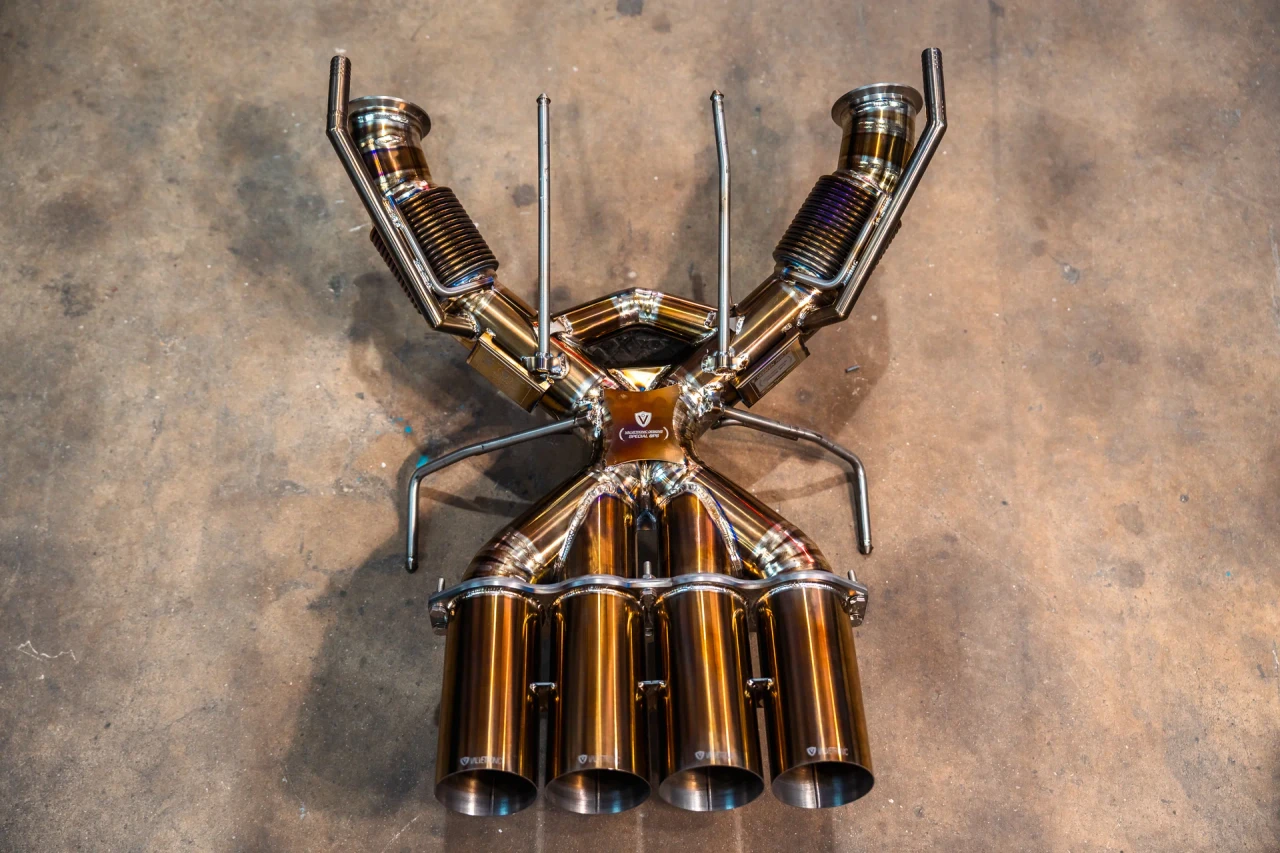
Valvetronic McLaren 765LT F1 Race Exhaust System
The McLaren 765LT receives a closely related philosophy but with an exhaust designed around the Longtail’s unique packaging.
Valvetronic developed this system from its previous 720S Double X-pipe program, then adapted the design around the restricted installation space of the 765LT.
Built Specifically Around the LT
The 765LT’s rear packaging leaves very little room for exhaust hardware.
Valvetronic specifically identifies LT-specific packaging as part of the system’s engineering.
That means the exhaust is not simply a 720S system with altered brackets.
Its routing was designed around the physical constraints of the 765LT platform.
Full Grade 5 Titanium Construction
Like the 750S system, the 765LT F1 Race Exhaust is built from aerospace-grade Grade 5 titanium.
The material reduces exhaust mass while retaining the strength needed for repeated high-temperature use.
On a car where McLaren already removed mass wherever possible, replacing heavier exhaust components with titanium follows the same basic philosophy as the LT itself.
Hybrid HP Crossover and X-Pipe
The 765LT also uses Valvetronic’s hybrid HP crossover and X-pipe configuration.
This crossover architecture is designed around both exhaust flow and sound shaping.
Rather than allowing both cylinder banks to remain acoustically isolated, the crossover changes how exhaust pulses interact, contributing to the sharper F1-inspired tone.
Fully Mandrel-Bent Tubing
The complete exhaust routing is mandrel bent to maintain consistent tubing geometry through the bends.
This helps avoid flattened sections that could introduce additional restriction in a performance application.
Valvetronic pairs the tubing with precision TIG-welded joints for durability.
Quad Straight-Cut Titanium Tips
Where the 750S uses dual outlets, the 765LT system finishes with four straight-cut titanium exhaust tips.
The quad-tip arrangement gives the system a distinctive visual identity that matches the aggressive rear design of the Longtail.
Optional Race Pipes
Optional Race Pipes are also available for the 765LT system.
These are intended for customers who want the most aggressive version of the exhaust and additional flame potential.
As with the 750S, those characteristics belong to the appropriate Race Pipe configuration and should not be implied for every installation.
Fitment Requires Extra Attention
The current XPH listing contains an important fitment inconsistency.
Its primary fitment information covers 2020–2023 McLaren 765LT models, while the year-by-year table also includes 2024 and 2025. The listing itself advises customers to verify those additional years with the manufacturer before ordering.
For that reason, the safest fitment guidance is:
2020–2023 McLaren 765LT: listed application
2024–2025 entries: verify compatibility before ordering
This is especially important on an exhaust system with platform-specific packaging.
Item link: https://x-ph.com/valvetronic-mclaren-765lt-f1-race-exhaust-system/?showHidden=true
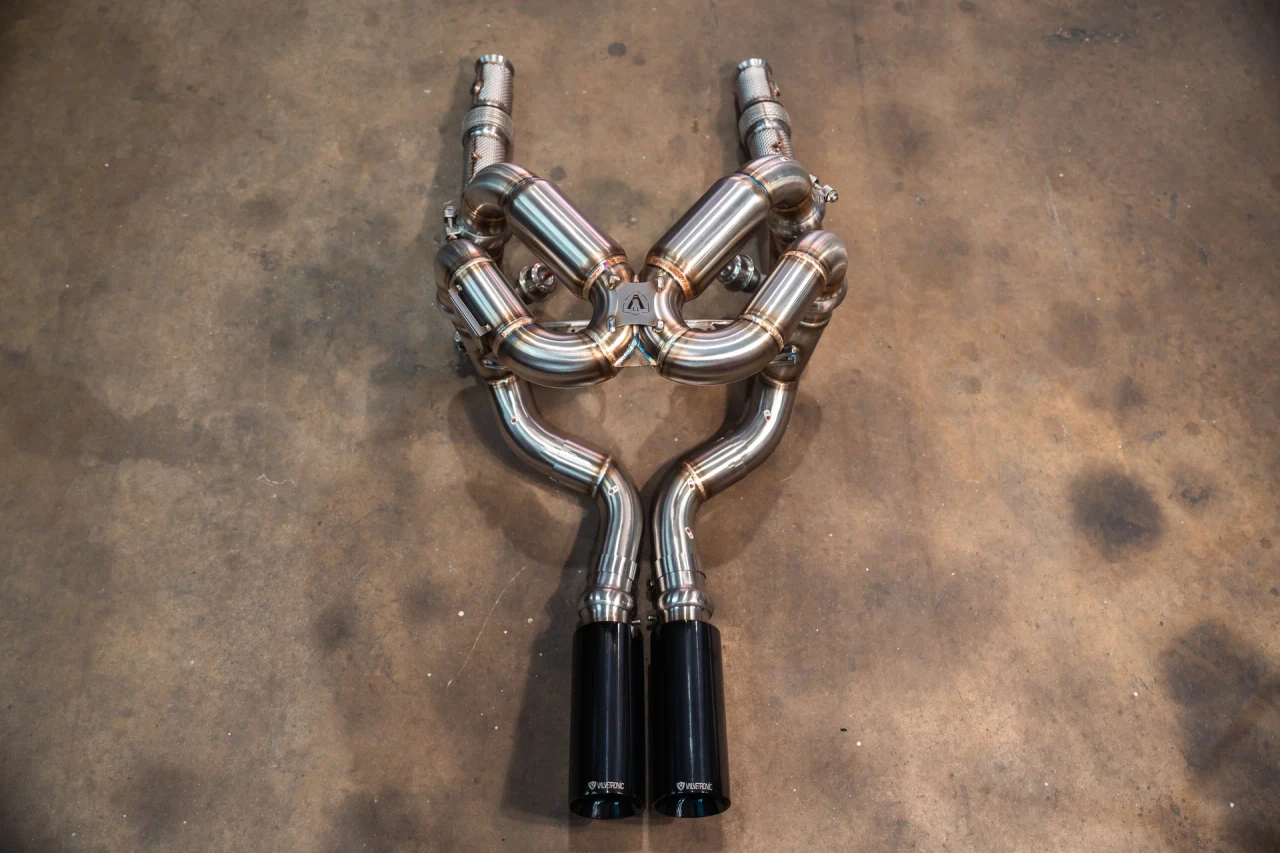
Valvetronic Lamborghini Murciélago Valved Sport Exhaust
Some exhaust systems are designed to make a turbocharged engine sound more exotic.
The Lamborghini Murciélago starts with something completely different:
A naturally aspirated Lamborghini V12.
Valvetronic’s system is designed to reveal more of that engine while preserving the ability to reduce exhaust volume when needed.
The system covers both the earlier 6.2L Murciélago and later 6.5L Murciélago LP640 applications.
Two Personalities for an Analog Lamborghini
The Murciélago belongs to an era when exotic cars were considerably more mechanical and less filtered than modern supercars.
Valvetronic builds on that character with a valve-controlled system that can move between two very different sound profiles.
With the valves open, the V12 is given a rawer and more aggressive motorsport character.
With the valves closed, exhaust volume is reduced for city driving, cruising, or any situation where the full V12 soundtrack is unnecessary.
Vacuum Valves With Key-Fob Control
The Murciélago system uses vacuum-operated valves controlled by a key-fob remote.
That gives the driver direct control independent of the car’s age or factory drive-mode electronics.
For a platform produced well before sophisticated modern active-exhaust systems became common, the solution provides contemporary sound control without fundamentally altering the character of the car.
Proprietary Resonator and Crossover
One of the most important aspects of the Murciélago system is its proprietary resonator and crossover architecture.
Valvetronic uses an oversized internal crossover along with tuned resonant chambers intended to improve the V12’s pitch, smoothness, and overall acoustic character.
This is more sophisticated than simply removing mufflers and making the car louder.
The goal is to shape the sound.
Acoustic Engineering to Control Drone
A naturally aspirated V12 can produce enormous exhaust volume.
Without proper acoustic control, that can also lead to unpleasant frequencies at sustained road speeds.
Valvetronic states that it uses acoustic modeling and tuned resonant chambers to manage pitch and reduce drone.
That becomes particularly useful on a car that may still be driven on long road trips or highway journeys.
Large Internal Cross-Section
The exhaust uses a large internal cross-section intended to improve exhaust scavenging and support sharper response.
The tubing is fully mandrel bent so its internal diameter remains consistent through the bends.
T304 Stainless Steel
The complete system is manufactured from T304 stainless steel.
That gives the exhaust the corrosion resistance and durability needed to survive repeated high-temperature operation behind a Lamborghini V12.
Lighter Than the OEM System
Valvetronic describes the Murciélago system as significantly lighter than the original exhaust, although the current XPH product information does not publish a precise weight-savings figure.
For that reason, it is best understood as a manufacturer-stated weight-reduction benefit rather than a specific pound or percentage claim.
Completely Reversible Installation
The Murciélago exhaust is designed around the factory mounting locations and requires no permanent vehicle modifications.
Valvetronic describes it as a 100% bolt-on and reversible installation, allowing the vehicle to be returned to its original exhaust configuration later.
That can be especially important on older exotic cars where maintaining the ability to return to factory specification has real value.
Murciélago Fitment
The current listing specifies:
2001–2006 Lamborghini Murciélago – 6.2L V12
2006–2010 Lamborghini Murciélago LP640 – 6.5L V12
Because both versions appear in the 2006 model year, owners of a 2006 vehicle should confirm the exact engine and model configuration before ordering.
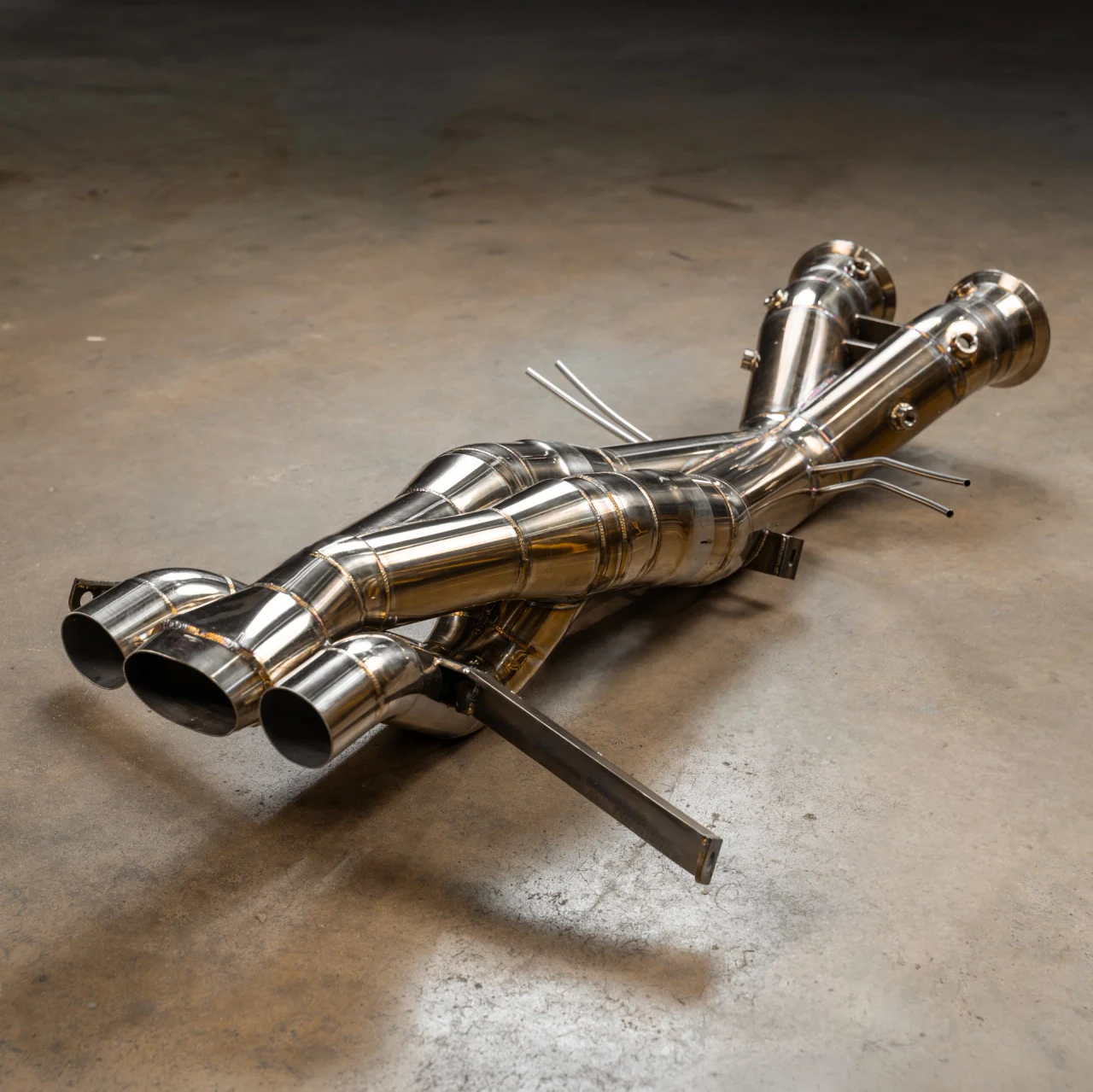
Valvetronic Lamborghini Temerario F1 Race Exhaust
The final product takes Lamborghini into an entirely new era.
The Temerario replaces the naturally aspirated V10 philosophy of the Huracán with a new twin-turbocharged V8 powertrain.
For the 2025–2026 Lamborghini Temerario, Valvetronic takes an intentionally uncompromising approach:
A non-valved F1 Race Exhaust.
Unlike the Cayenne, GT2 RS, or Murciélago systems, there is no quiet mode here.
No Valves. No Alternate Sound Mode.
The Temerario system is deliberately non-valved.
There is no closed position for quieter cruising and no remote-controlled change in personality.
The exhaust uses a fixed, straight-through race-oriented configuration intended to maximize sound output.
That makes it fundamentally different from Valvetronic’s more street-oriented systems.
The name “Valvetronic Designs” does not mean every product necessarily contains exhaust valves.
This Temerario F1 Race system specifically does not.
Straight-Through Race Architecture
The system uses a straight-through exhaust design intended to reduce backpressure compared with the factory exhaust and provide a freer path out of the twin-turbocharged V8.
Its focus is performance-oriented airflow and maximum acoustic character rather than sound moderation.
High-Frequency F1-Inspired Sound
Valvetronic targets an aggressive, high-frequency exhaust note throughout the engine’s RPM range.
That is particularly interesting on the Temerario because the exhaust needs to overcome some of the sound attenuation created by the twin turbochargers.
Rather than trying to recreate the older V10 exactly, the system is engineered to bring a more exotic, motorsport-inspired tone out of the new V8 architecture.
T304 Stainless Steel Construction
Unlike the titanium McLaren F1 Race systems, the Temerario exhaust is constructed from premium T304 stainless steel.
The tubing is precision TIG welded and shaped around the Temerario’s factory installation points.
Lighter Than the Factory Components
Valvetronic states that the race system is designed to weigh less than the OEM exhaust hardware.
The current XPH product description does not provide a precise reduction figure, so no specific pound or percentage savings should be assumed.
Direct Bolt-On Installation
The exhaust is designed to install using factory mounting locations.
No alternate valve-control system is necessary because the exhaust has no valves to operate.
Professional installation is recommended.
Temerario Fitment
The current listing specifies:
2025 Lamborghini Temerario
2026 Lamborghini Temerario
Because this is a new platform and an aggressive race-oriented exhaust, exact vehicle configuration and applicable local sound and emissions requirements should be confirmed before installation.
Three Different Valvetronic Exhaust Philosophies
Looking at all six systems together reveals that Valvetronic does not use one exhaust architecture for every performance vehicle.
There are essentially three different approaches represented here.
Valved Sport Systems
The Porsche Cayenne and Lamborghini Murciélago systems prioritize flexibility.
Both can become aggressive when desired while retaining a quieter operating mode for normal road use.
The Cayenne integrates with factory electronic valves, while the older Murciélago uses a vacuum-operated valve system with key-fob control.
F1 Valved Performance
The Porsche 991.2 GT2 RS sits between street refinement and a more extreme motorsport personality.
Its vacuum-controlled F1 exhaust can open up for the full twin-turbo flat-six character while retaining a quieter closed-valve mode.
F1 Race Systems
The McLaren 750S, McLaren 765LT, and Lamborghini Temerario systems move much further toward the race side.
The two McLaren applications use lightweight Grade 5 titanium and hybrid crossover/X-pipe architectures to emphasize sharp, high-frequency sound.
The Temerario uses a fixed straight-through, non-valved T304 stainless design that prioritizes maximum exhaust output rather than multiple sound personalities.
Titanium vs. T304 Stainless Steel
These six systems also illustrate why exhaust material depends on the application.
The 750S and 765LT F1 systems use Grade 5 titanium.
Titanium is especially attractive for exotic cars because of its high strength-to-weight ratio and ability to withstand substantial heat.
Reducing rear exhaust mass also fits naturally with the lightweight engineering philosophy behind the McLarens.
The Cayenne, GT2 RS, Murciélago, and Temerario systems use T304 stainless steel.
T304 provides excellent corrosion resistance and durability while remaining well suited to complex exhaust fabrication and repeated temperature cycles.
Neither material is automatically the right choice for every vehicle.
The exhaust has to be engineered around packaging, intended use, sound, durability, weight targets, and cost.
Valved or Non-Valved: Which Philosophy Makes Sense?
A valved exhaust makes the most sense when the vehicle regularly needs to serve more than one role.
The Cayenne is the clearest example.
It can spend the morning on a highway commute and the afternoon on an aggressive back road.
Giving the driver control over exhaust volume makes the system more adaptable.
The Murciélago and GT2 RS benefit for similar reasons.
Both are extreme vehicles, but both may still see street driving where maximum exhaust volume is not always desirable.
The Temerario F1 Race system is different.
It deliberately removes that compromise.
It is for the owner who wants the race-oriented sound all the time and understands that there is no quieter valve setting available.
Optional Race Pipes on the McLaren Systems
Both McLaren systems can be configured with optional Race Pipes.
These are intended to further increase exhaust aggression and, according to Valvetronic, can increase visible flame potential.
Those options should be treated separately from the base F1 exhaust system.
Customers should verify:
- Which configuration they are purchasing
- Whether Race Pipes are included
- Local emissions requirements
- Local noise regulations
- Whether the vehicle is intended for street or competition use
The more aggressive configuration may not be road legal in every jurisdiction.
No Unsupported Horsepower Claims
These systems are designed around improved exhaust flow and reduced restriction, but the current XPH listings do not provide specific dyno horsepower gains for these six products.
For that reason, horsepower increases should not be assumed.
Actual output changes can depend on:
- Exhaust configuration
- Downpipes or Race Pipes
- ECU calibration
- Vehicle condition
- Fuel
- Supporting modifications
- Emissions hardware
For these products, the clearer benefits are their exhaust architecture, material choices, sound engineering, reduced restriction, and—in relevant applications—reduced system mass.
Professional Installation Matters
These are not generic exhaust systems going onto ordinary commuter cars.
They are designed for:
- Porsche performance vehicles
- McLaren supercars
- Lamborghini V12 and V8 exotics
Installation involves expensive bodywork, tight clearances, significant exhaust heat, electronic or vacuum valve components, and precise exhaust-tip alignment.
Professional installation is strongly recommended.
The installer should verify:
- Correct vehicle fitment
- Exhaust clearances
- Mounting points
- Valve operation
- Vacuum or electronic connections
- Downpipe compatibility
- Race Pipe configuration
- Tip alignment
- Exhaust leaks
- Surrounding heat-sensitive components
A properly installed exhaust should fit the vehicle as intentionally as it sounds.
Six Cars, Six Different Exhaust Experiences
The diversity of these six Valvetronic systems is what makes the lineup interesting.
For the 9Y0 Cayenne 4.0T, the goal is to add more V8 presence without giving up luxury-SUV usability.
For the 991.2 GT2 RS, it is about giving the twin-turbo flat-six a more immediate F1-inspired character while retaining valve control.
For the 750S, Valvetronic uses lightweight Grade 5 titanium and crossover engineering developed from its 765LT program.
For the 765LT, the exhaust is packaged specifically around the Longtail’s extremely limited rear space while bringing a sharper titanium soundtrack to one of McLaren’s most focused road cars.
For the Murciélago, modern valve and acoustic engineering is applied to one of Lamborghini’s most iconic naturally aspirated V12 platforms.
And for the Temerario, the philosophy changes completely: straight-through, non-valved, race-focused sound for Lamborghini’s new twin-turbo V8 era.
Shop Valvetronic Designs Exhaust Systems at Extreme Power House
Porsche Cayenne 9Y0 4.0T V8
Valvetronic Designs Valved Sport Exhaust System
T304 stainless steel construction, quad-chambered muffler design, factory electronic valve integration, and direct bolt-on installation for compatible 2018+ Cayenne 9Y0 4.0T V8 applications.
McLaren 750S
Valvetronic Designs F1 Race Exhaust System
Grade 5 titanium, hybrid HP crossover and X-pipe design, dual straight-cut titanium outlets, and optional Race Pipes for compatible 2024+ McLaren 750S applications.
Porsche 991.2 GT2 RS
Valvetronic Designs F1 Valved Cat-Back Exhaust
Brushed T304 stainless steel, 2.5-inch mandrel-bent tubing, vacuum valves, key-fob control, and direct connection to compatible factory or aftermarket downpipes for 2018–2019 GT2 RS models.
McLaren 765LT
Valvetronic Designs F1 Race Exhaust System
Grade 5 titanium, hybrid crossover/X-pipe architecture, quad titanium tips, LT-specific packaging, and optional Race Pipes. The current listing clearly covers 2020–2023 and also contains 2024–2025 entries that should be confirmed before ordering.
Lamborghini Murciélago
Valvetronic Designs Valved Sport Exhaust System – LAM.MURC.VSES.FF.BR
T304 stainless construction, proprietary resonator and crossover, vacuum valve control, direct-fit reversible installation, and compatibility with listed 6.2L Murciélago and 6.5L LP640 applications.
Lamborghini Temerario
Valvetronic Designs F1 Race Exhaust – LAM.TEM.F1.BR
T304 stainless steel, straight-through non-valved race architecture, precision TIG welding, reduced restriction, and an aggressive high-frequency exhaust character for 2025–2026 Temerario applications.
From a daily-driven Porsche SUV to iconic V12 Lamborghinis and titanium McLaren race systems, these six additions show just how different a performance exhaust can be when it is designed around the vehicle rather than a single universal formula.
Explore these Valvetronic Designs exhaust systems now at Extreme Power House.